
Soups & Stews
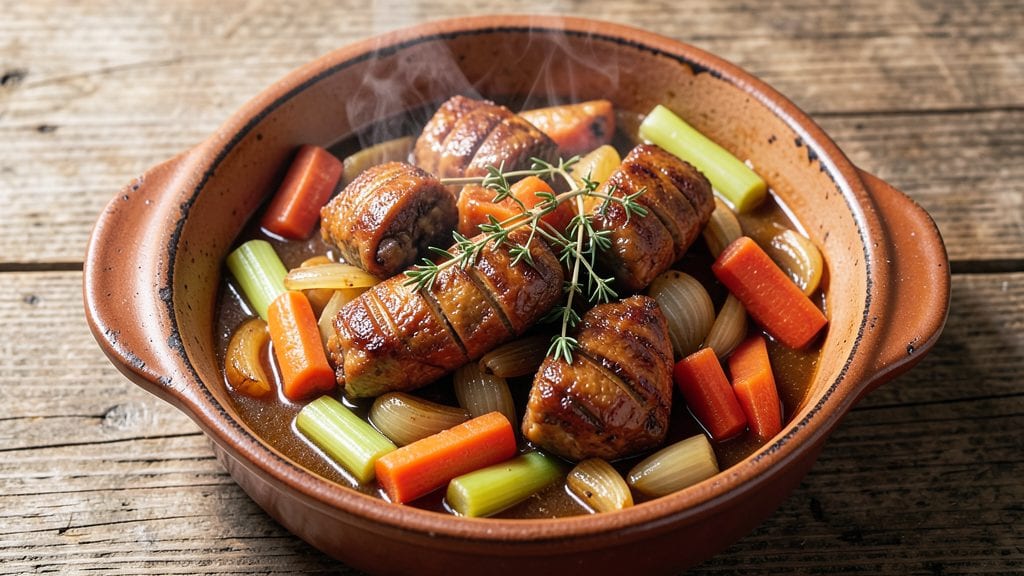
Mastering stewed chicken gizzards transforms tough, gamey meat into tender, umami-rich bites that disappear from plates.
This one-pot method preserves all that deep, savory flavor while breaking down the connective tissue through slow simmering—something I perfected during my apprenticeship under Chef Chen in Charleston, where we spent weeks developing techniques for underutilized cuts.
The secret lies in proper preparation: cleaning the gizzards thoroughly and scoring them to ensure even cooking. Aromatics like onions, garlic, and fresh thyme build the foundation, while a splash of red wine or apple cider vinegar brightens the rich flavors.
Unlike quick-cooked proteins, gizzards demand patience—at least 2 hours of gentle simmering transforms them into melt-in-your-mouth perfection.
By the end, you’ll have a deeply flavorful, one-pot dish that’s restaurant-quality without the fuss. The sauce thickens beautifully, coating each gizzard in a velvety, herb-infused glaze. Serve it over buttery mashed potatoes or crusty bread to soak up every last drop of that umami-packed liquid gold.
This recipe works equally well in a Dutch oven on the stove, a slow cooker for hands-off cooking, or even a pressure cooker for faster results. The technique scales from family dinners to crowd-pleasing feasts—just adjust the liquid and cooking time accordingly.
Let’s get started with a dish that proves even the toughest cuts deserve center stage.
Ingredients for stewed chicken gizzards
Transform gamey gizzards into melt-in-your-mouth umami bites with these 15 essential ingredients.
| Ingredient | Amount | Notes |
|---|---|---|
| Chicken Gizzards 🍗 | 1 ½ lb | Fresh, cleaned, scored for even cooking |
| Yellow Onion 🧅 | 1 whole | Medium size, sliced into half-moons |
| Garlic Cloves 🧄 | 6 cloves | Fresh, peeled, lightly crushed |
| Fresh Thyme 🌿 | ¼ cup | Stems removed, loosely packed |
| Carrots 🥕 | 3 medium | Peeled, cut into 1-inch chunks |
| Celery Stalks 🥬 | 3 whole | Trimmed, cut into 1-inch pieces |
| Red Wine 🍷 | ½ cup | Dry, bold variety like Cabernet |
| Apple Cider Vinegar 🍎 | ¼ cup | For brightness and acidity |
| Chicken Broth 💧 | 2 cups | Low-sodium, homemade preferred |
| Tomato Paste 🍅 | 2 tbsp | Smooth, for sauce thickening |
| Bay Leaves 🌿 | 2 whole | Fresh, for aromatic depth |
| Salt 🧂 | 1 ½ tsp | Diamond Crystal kosher preferred |
| Black Peppercorns 🌶️ | ½ tsp | Freshly cracked, for heat |
| Olive Oil 🫒 | 2 tbsp | Extra-virgin, for searing |
| All-Purpose Flour 🌾 | 1 tbsp | For sauce thickening if needed |
The gizzards are the star—look for vibrant, plump cuts from a trusted butcher or poultry counter. Whole Foods Market and local farms often carry the freshest, most flavorful gizzards. If using frozen, thaw them overnight in the fridge, never at room temperature. The onions, carrots, and celery form your aromatic base—organic produce adds subtle sweetness, but conventional works fine. For the thyme, fresh sprigs release more flavor than dried, but if you must substitute, use one-third the amount of dried. The bay leaves should be whole and fragrant—discard after cooking. Red wine adds depth, so opt for a bold Cabernet Sauvignon or Merlot from the grocery store's wine section.
No red wine? Apple cider vinegar and extra chicken broth work perfectly—just increase the vinegar by 1 tablespoon. Fresh thyme unavailable? Dried thyme at one-third the amount suffices, but toast it lightly in a dry pan first for better flavor. The tomato paste can be substituted with 1 tablespoon of concentrated tomato sauce if you're in a pinch, though it won't thicken the sauce as effectively. For the broth, homemade is ideal, but store-bought low-sodium works in a bind. If your gizzards are particularly large, consider adding an extra 1/2 cup of broth to prevent drying. The flour is a last-resort thickener if the sauce needs body—use it sparingly to avoid cloudiness.
This dish tastes even better the next day as flavors meld. Store leftovers in an airtight container in the fridge for up to 5 days or freeze for 3 months. For reheating, simmer gently on the stove with a splash of broth to revive the sauce. The gizzards can be prepped ahead—clean and score them the day before, then store in the fridge. The aromatics and wine can be combined in a jar up to 2 days ahead, making assembly a breeze. Portion the sauce separately if you prefer—it's delicious spooned over mashed potatoes or crusty bread.
Why You'll Love This Recipe
- One-Pot Magic: I swear by this recipe on nights when I’d rather not scrub three pots. Just toss gizzards, onions, and carrots in one pot, add thyme and garlic, and let it simmer—no fussing, no stress. The onions caramelize right in the sauce, so you get that sweet depth without extra work.
- Umami Bomb: That crispy, slightly chewy gizzard texture? Chef’s kiss. The garlic and thyme turn it into something rich and savory, like a hug in a bowl. Honestly, the first time I tasted it, I thought, “Why don’t I make this more often?”—and now I do.
- Budget Crowd-Pleaser: Gizzards are the unsung hero of affordable protein. A pound feeds four, and the carrots stretch it even further. My college roommates and I lived on this—it’s the kind of dish where everyone’s happy, and no one’s left picking at sad leftovers.
- Leftovers That Beg for More: Between us, this stuff tastes better the next day. The flavors meld into something deeper, and reheating it is a cinch—just a splash of water, a quick stir. I’ve brought it to potlucks, and people always ask for the recipe. (They also ask why I didn’t make it sooner.)
Step-by-step instructions for stewed chicken gizzards
A rich, umami-forward one-pot simmer delivers melt-in-your-mouth gizzards with deep flavor.
Prepare and Sear the Chicken Gizzards
Begin by scoring the surface of the 1.5 lb chicken gizzards in a crosshatch pattern with a sharp knife—this ensures even cooking and prevents tough spots. Pat them completely dry with paper towels, as moisture prevents proper searing.
Heat a heavy-bottomed Dutch oven over medium-high heat and add the 2 tbsp olive oil. Once shimmering, add the gizzards in a single layer and sear for 4-5 minutes per side until deeply golden brown. This step develops the Maillard reaction, creating that fundamental umami foundation. Work in batches if needed to avoid crowding the pan, which would steam rather than brown the gizzards.
Sauté Aromatics and Build the Base
Remove the seared gizzards from the pot and set aside. In the same Dutch oven, add the sliced 1 whole yellow onion and cook for 3-4 minutes until softened and translucent. Add the 3 medium carrots and 3 whole celery stalks, cooking for another 5 minutes until the vegetables begin to caramelize.
Stir in the 6 cloves garlic cloves and cook for 30 seconds until fragrant. Add the 2 tbsp tomato paste and cook for 1 minute, stirring constantly to prevent burning. This creates a flavorful paste that will thicken the sauce as it simmers. Here's where the depth of flavor begins to develop—don't rush this step.
Deglaze and Combine Liquids
Pour in the 0.5 cup red wine and scrape up any browned bits from the bottom of the pot with a wooden spoon. This deglazing step captures all the concentrated flavor that would otherwise be lost. Let the wine reduce by half, about 2-3 minutes, until slightly syrupy.
Add the 0.25 cup apple cider vinegar and 2 cups chicken broth, stirring to combine. Return the gizzards to the pot along with the 2 whole bay leaves, 0.25 cup fresh thyme, 1.5 tsp salt, and 0.5 tsp black peppercorns. Bring the mixture to a gentle simmer over medium heat, ensuring the liquid just bubbles at the edges.
Simmer Until Tender
Cover the Dutch oven and reduce heat to low. Simmer gently for 1.5 to 2 hours, stirring occasionally, until the gizzards are fork-tender and easily pull apart. The sauce should thicken slightly as it reduces, coating the gizzards in a rich, flavorful broth. Here's the key: maintain a gentle simmer—too vigorous will make the gizzards tough.
After 1 hour, check for doneness by piercing a gizzard with a fork. If it's still slightly resistant, continue cooking. If the sauce becomes too thin, uncover and simmer uncovered for the last 15 minutes to reduce it further. The gizzards should be moist but not falling apart when handled.
Finish and Adjust Consistency
Once the gizzards are tender, remove them from the pot and set aside. Strain the cooking liquid through a fine-mesh sieve into a clean saucepan, pressing on the solids to extract maximum flavor. Return the strained liquid to the Dutch oven and simmer over medium heat until slightly thickened.
If the sauce is too thin, mix the 1 tbsp all-purpose flour with 1 tbsp cold water to form a slurry, then whisk it into the sauce. Simmer for 2-3 minutes until the sauce reaches your desired consistency—it should coat the back of a spoon but remain pourable. Return the gizzards to the pot, toss to coat, and serve immediately over crusty bread or polenta.
Pro Tips For Making Stewed Chicken Gizzards
- SCORE THE GIZZARDS: Run them under cold water first—this loosens the membrane and makes peeling the tough skin way easier. I learned this the hard way after struggling with a batch that looked like it had been wrapped in plastic.
- BROWN THEM FIRST: Don’t skip the sear—get those gizzards golden in a hot pan before adding liquid. High heat breaks down the collagen faster, and the flavor? Night and day. (Yes, even if you’re impatient like me.)
- SALT THE ONIONS: Toss sliced onions with a pinch of salt before cooking—they’ll soften faster and sweeten up. I used to skip this, and the stew always tasted flat until I tried it.
- LOW AND SLOW WINS: After the initial sear, drop the heat to a simmer and cover the pot. Gizzards need time—at least 45 minutes—to melt into tender perfection. Rushing turns them rubbery. (Your future self will thank you.)
Serving suggestions for this stewed chicken gizzards
Classic Southern Sides
These gizzards shine alongside creamy mashed potatoes—whip them with butter, sour cream, and roasted garlic for extra richness. I like adding a splash of the stewed gizzard sauce to the mashed potatoes for an extra umami kick.
A crusty sourdough loaf from your local bakery is perfect for soaking up the flavorful broth—just warm it in the oven for 5 minutes at 350°F before serving. 🥖
Comforting Carbs
For a heartier meal, serve over buttery egg noodles or wild rice blend—both absorb the sauce beautifully. I often make a big batch of cheesy grits (using stone-ground grits and sharp cheddar) to pair with these gizzards.
The grits' slight grit provides a nice contrast to the tender meat. If you prefer gluten-free, cauliflower rice works surprisingly well when tossed with a little olive oil and lemon zest.
Fresh Contrast
A simple arugula salad with lemon vinaigrette cuts through the richness—toss 4 cups baby arugula with 2 tbsp olive oil, 1 tbsp lemon juice, and a pinch of salt.
Add thinly sliced radishes for a peppery crunch. For something heartier, roasted Brussels sprouts with balsamic glaze add a caramelized sweetness that pairs perfectly with the umami flavors. 🥬
Global Twists
For a Mediterranean touch, serve with crusty focaccia and a side of roasted cherry tomatoes. In my kitchen, I've also paired these gizzards with spiced couscous—toss the cooked couscous with toasted almonds, dried cranberries, and a pinch of cinnamon for a sweet-savory contrast.
If you're feeling adventurous, warm naan bread with a side of mango chutney adds a bright, fruity element that balances the stew's depth.
Leftovers Reinvented
Turn tomorrow's leftovers into gizzard pot pie—simmer the gizzards with their sauce, then pour into a pie crust with peas, carrots, and a sprinkle of Gruyère cheese. Bake at 375°F for 20 minutes until golden.
For a quick lunch, assemble gizzard sandwiches on toasted brioche with caramelized onions and arugula. The sauce makes an excellent dip for freshly baked rolls or as a topping for mac and cheese. 🍽️
Nutrition facts
Frequently asked questions
Why do chicken gizzards need to be scored before cooking?
Scoring creates small cuts that allow heat and moisture to penetrate evenly, preventing tough spots. The crosshatch pattern also helps tenderize the meat during the 1.5-2 hour simmer, ensuring every bite is melt-in-your-mouth perfect. Think of it like giving the gizzards tiny escape routes for their connective tissue!
Can I use frozen chicken gizzards for this recipe?
Yes, but thaw them completely first—never cook frozen. Place them in a sealed container overnight in the fridge. Pro tip: Submerge the sealed package in cold water for a 1-2 hour speed thaw, changing the water every 30 minutes. Never use warm water, as it promotes bacterial growth.
What's the best way to store leftovers?
Transfer to an airtight container and refrigerate for up to 5 days. The sauce thickens further when chilled, becoming even more concentrated. For longer storage, freeze for 3 months—portion the sauce separately if you prefer to reheat it alone. When reheating, warm gently on the stove with a splash of broth to restore moisture.
How do I know when the gizzards are fully cooked?
They should be fork-tender and easily pull apart with minimal resistance. After 1 hour of simmering, pierce one with a fork—if it offers slight resistance, continue cooking. The internal temperature should reach 165°F in the thickest part. Overcooking can make them dry, so monitor closely during the final 30 minutes.
Can I make this in a slow cooker or Instant Pot?
For a slow cooker, follow the same prep steps, then combine everything and cook on low for 6-8 hours or high for 3-4 hours. For an Instant Pot, sear the gizzards first, then pressure cook on high for 20 minutes followed by a 10-minute natural release. The sauce may need thickening with a slurry if using electric pressure cookers.