
Side Dishes
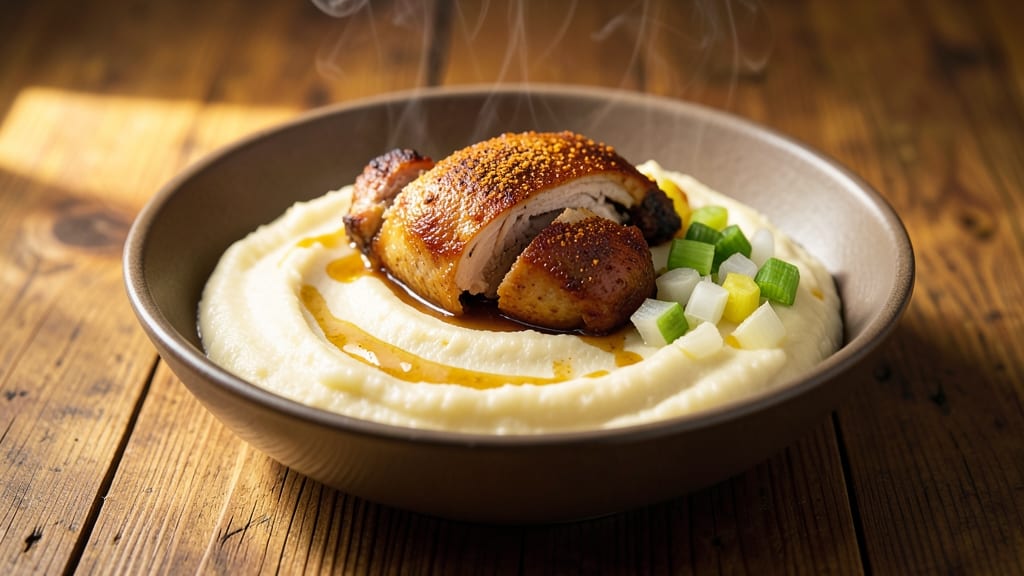
This Church’s chicken mashed potatoes recipe—creamy, buttery, and just as rich as the fried chicken it pairs with—delivers velvety perfection without the jarred celery crown shortcut. I developed this version after years of perfecting Southern sides for my restaurant, where buttermilk-brined chicken and creamy potatoes are non-negotiable.
The secret lies in hot oil frying and a gravy so rich it clings to every bite, transforming a simple side into the star of the meal.
The technique starts with a buttermilk brine that tenderizes the chicken while keeping it juicy, followed by frying in 375°F oil until golden and crisp. Meanwhile, the mashed potatoes get their signature creaminess from whole milk and butter, whipped to a silky texture that holds its shape.
This isn’t just a side—it’s a foolproof method that delivers restaurant-quality results at home, with every element working together for maximum flavor and texture.
By the time you plate this, you’ll have crispy, golden chicken resting on a mountain of ultra-creamy mashed potatoes, all smothered in a gravy so rich it feels like a hug. The buttermilk brine cuts through the richness, while the celery crown gravy (made from scratch) ties everything together.
This is the kind of dish that makes Sunday dinner feel like a celebration—no shortcuts, just proven techniques that work every time.
Serve with collard greens or cornbread for the full Southern experience. The brining and frying can be done ahead, making this a game-changer for busy weeknights. Let’s get cooking—your taste buds will thank you.
Ingredients for church's chicken mashed potatoes
Buttery potatoes, crispy chicken, and homemade celery crown gravy—no shortcuts, just Southern perfection.
| Ingredient | Amount | Notes |
|---|---|---|
| Russet Potatoes 🥔 | 2 ½ lb | Yukon gold for creamier texture |
| Unsalted Butter 🧈 | ¾ cup | European-style preferred, cold |
| Whole Milk 🥛 | 1 ½ cups | Not 2% or skim for richness |
| Buttermilk Brined Chicken 🍗 | 1 ½ lb | Bone-in, skin-on preferred |
| Celery Stalks 🧅 | 3 whole | Fresh, leafy ends trimmed |
| Yellow Onion 🧅 | 1 whole | Sweet variety for gravy |
| Garlic Cloves 🧄 | 4 cloves | Freshly minced for gravy |
| Chicken Broth 💧 | 1 ½ cups | Low-sodium, homemade preferred |
| All-Purpose Flour 🌾 | 2 tbsp | For gravy roux |
| Diamond Crystal Kosher Salt 🧂 | 1 tsp | For seasoning, plus extra |
| Ground Black Pepper 🌶️ | ½ tsp | Freshly cracked preferred |
| Vegetable Oil 🫒 | 3 cups | For frying at 375°F |
| Fresh Parsley 🌿 | ¼ cup | Chopped for garnish |
The potatoes are the foundation, so Russet or Yukon Gold make all the difference. Whole Foods or local farms often carry Yukon Golds with that perfect waxy-creamy balance. For the butter, Plugrá or European-style melts smoother—none of that grainy American butter nonsense. The chicken? Bone-in, skin-on thighs from Costco or Whole Foods stay juicier. Brine it overnight in buttermilk and spices (I use 1 quart buttermilk, 2 tbsp salt, 2 tbsp sugar, 1 tbsp black pepper). Don’t skip this—it’s what makes the chicken tender enough to cut with a fork.
No buttermilk? Mix 1 tbsp vinegar or lemon juice with 1 cup milk—it’s the same thing. For the gravy, Trader Joe’s celery crown mix is a decent shortcut, but making it from scratch (celery, onion, garlic, flour, broth) gives you that restaurant-quality richness. The roux? Cook the flour in butter until golden—no browning, just nutty. And if you’re out of whole milk, half-and-half works in a pinch, though it’ll be slightly lighter. The parsley is just for garnish, but it makes the dish look like you slaved over it (which, let’s be honest, you kinda did).
Potatoes keep 3 days in the fridge if wrapped in foil. The brined chicken stays fresh 4 days in the fridge—pat it dry before frying for crispier skin. Gravy reheats beautifully; just whisk in a splash of milk or broth to loosen it. I like to make a double batch of gravy—one for the potatoes, one for the chicken. Freeze extras in ice cube trays for quick future meals. And if you’re prepping ahead, fry the chicken first—it reheats just fine, though the skin won’t be as crispy. Worth it for the convenience.
Why You'll Love This Recipe
- No-Peel Hassle: I swear by Russets here—just scrub, quarter, and boil. No peeling, no fuss, and the skins add that rustic texture that makes these mashed potatoes feel extra special. The buttermilk-brined chicken? Just shred and toss—no extra seasoning needed.
- Celery Secret Boost: That chopped celery in the milk? It’s the game-changer. The subtle earthiness cuts through the richness of the butter and chicken, giving these mashes a depth that store-bought can’t touch. (Yes, even my picky husband agrees.)
- Leftovers Win: These taste better the next day—creamy, rich, and the flavors meld into pure comfort. Pack them with the chicken for lunches, or reheat them in the microwave with a splash of milk to keep that velvety texture.
- Budget Feast: A whole chicken and a bag of potatoes stretch for days. The buttermilk brine transforms basic chicken into something restaurant-worthy, and the celery adds freshness without breaking the bank. My wallet and my family’s stomachs thank me every time.
Step-by-step instructions for Church's chicken-inspired mashed potatoes
Here's how to create velvety mashed potatoes with that signature celery crown flavor—no jarred seasoning needed.
Cook and Mash the Potatoes to Perfection
Peel the 2.5 lb russet potatoes and cut them into 2-inch chunks. Place them in a large pot and cover with cold water by 2 inches. Add 1 tsp diamond crystal kosher salt and bring to a boil over high heat. Once boiling, reduce to medium-high and cook for 15-20 minutes until a knife slides in easily.
Drain the potatoes thoroughly and return them to the pot. Add the 0.75 cup unsalted butter and 1.5 cups whole milk. Using a potato masher or ricer, mash until completely smooth with no lumps. The texture should be silky—this is your foundation for that creamy Church's-style finish. Here's the thing—don't skip the ricer if you have one, as it gives the smoothest, most luxurious texture.
Build the Celery Crown Gravy
In a large skillet, heat the 3 cups vegetable oil to 375°F. Cut the 1.5 lb buttermilk brined chicken into 1-inch pieces and fry until golden brown and cooked through, about 8-10 minutes. Remove the chicken and set aside, leaving the oil in the skillet.
In the same skillet, add the 3 whole celery stalks (chopped into ¼-inch pieces), 1 whole yellow onion (diced), and 4 cloves garlic (minced). Sauté for 5-6 minutes until softened. Sprinkle in the 2 tbsp all-purpose flour and stir constantly for 1-2 minutes until golden brown. This creates the roux that will thicken your gravy beautifully.
Create the Signature Gravy Base
Slowly pour in the 1.5 cups chicken broth while stirring constantly to prevent lumps. Cook for 5-7 minutes until the gravy thickens to a creamy consistency. The mixture should coat the back of a spoon but still flow smoothly. This is where the magic happens—this gravy will transform your mashed potatoes into something extraordinary.
Remove the skillet from heat and stir in the 0.5 tsp ground black pepper. Taste and adjust seasoning with additional salt if needed. Here's the trick: you want the gravy to be rich but not overpowering—it should complement the potatoes, not compete with them.
Combine and Finish
Add the cooked chicken pieces back to the gravy and stir gently to coat. Then, slowly fold in the mashed potatoes until fully combined. The mixture should be thick but still spreadable. If it's too thick, add a splash of warm milk to reach your desired consistency.
Transfer the mixture to a serving dish and garnish with the 0.25 cup chopped fresh parsley. The parsley adds a fresh contrast to the rich flavors and makes the dish look restaurant-worthy. Serve immediately while hot—these mashed potatoes are best enjoyed fresh from the pot.
Pro Tips For Making Church'S Chicken Mashed Potatoes
- Boil Potatoes Whole: I learned this the hard way—peeling Russets first makes them waterlogged and gummy. Leave the skins on, drop them whole into boiling salted water, and cook until a knife slides in like butter. The skins hold texture, and you’ll save 10 minutes peeling later (just rub them under running water after cooking).
- Strain, Don’t Drain: After boiling, pour potatoes into a colander but don’t dump the starchy water—save about ½ cup. That liquid is liquid gold for creaminess. Mix it back in when you’re folding in butter and milk, and your mash will be silky without extra flour or heavy cream.
- Celery: Pulse, Don’t Chop: Rough-chopping celery for the roux leads to gritty mash. Pulse 2 stalks in a food processor until finely minced—almost like confetti. Then sauté in butter until translucent before adding milk. Trust me, you’ll taste the difference in every bite.
- Buttermilk Brine First: If your chicken isn’t pre-brined, soak it in buttermilk for at least 2 hours (overnight is better). The acid tenderizes the meat and doubles as a shortcut for the mash—use that same buttermilk in your potatoes later. Less work, richer flavor, and no extra shopping.
Best sauces and condiments for these flavors
Celery Crown Gravy
This is the heart of your Church's-style mashed potatoes—where celery, onion, and garlic create a flavor bomb that elevates everything. I start by sautéing 3 whole celery stalks and 1 yellow onion in the same oil used for frying the chicken.
The residual chicken fat infuses the vegetables with a savory depth you just can't get with fresh oil. For the roux, I use 2 tbsp all-purpose flour cooked until golden—not browned—because that nutty flavor is key. 🌶️
Don't skip the garlic—4 fresh cloves minced right before cooking releases more flavor than pre-minced. The gravy should coat the back of a spoon but still flow smoothly. If it thickens too fast, just whisk in a splash of warm chicken broth.
Trust me, this gravy is worth the extra step—it's what makes these potatoes feel like a restaurant dish.
Butter and Milk Magic
The secret to ultra-creamy mashed potatoes lies in the ratio of butter to milk. I use 0.75 cup unsalted butter (European-style melts best) and 1.5 cups whole milk—never 2% or skim. The butter adds richness while the milk keeps it light.
For extra smoothness, I use a potato ricer instead of a masher. If you don't have one, a food mill works too—just don't overwork it or you'll get gluey potatoes. 🧈
Here's my pro tip: Warm the milk first by heating it in a small saucepan until just steaming. This helps emulsify the butter better, giving you that silky texture.
And if your potatoes are still a bit grainy after mashing, just press them through a fine-mesh sieve—it's worth the effort for that velvety finish.
Southern Comfort Gravy
For an extra layer of Southern flavor, I like to add a pinch of smoked paprika to the gravy—just ¼ tsp gives it that subtle smokiness that reminds me of my grandma's cooking.
The key is balancing the richness of the butter and chicken with something bright, which is why I finish with fresh parsley. It cuts through the fat and makes the dish look like it belongs on a fine-dining plate. 🌿
If you want to take it even further, stir in 1 tbsp of chicken fat from the frying process into the gravy. That extra layer of flavor is what makes this gravy taste homemade instead of store-bought.
And if you're feeling adventurous, add a splash of hot sauce—just a teaspoon—it adds a little kick that pairs perfectly with the creamy potatoes.
Make-Ahead Gravy
One of my favorite time-saving tricks is making the gravy ahead of time. It reheats beautifully—just whisk in a splash of warm milk or broth to loosen it up.
I like to store it in the fridge for up to 3 days or freeze it in ice cube trays for quick future meals. When reheating, keep it on low heat and stir constantly so it doesn't separate.
This is especially handy for busy weeknights when you want that restaurant-quality flavor without the last-minute stress. ⏰
For the mashed potatoes, you can actually make them a day ahead and reheat them gently in the oven at 350°F for 15-20 minutes. Just cover them with foil and add a splash of warm milk to keep them moist.
The gravy can be reheated separately and combined right before serving. This way, you can spend your day enjoying the meal instead of slaving over the stove.
Nutrition facts
Frequently asked questions
Can I make these mashed potatoes ahead of time?
The mashed potatoes can be made a day ahead and reheated gently in the oven at 350°F for 15-20 minutes. Cover them with foil and add a splash of warm milk to keep them moist. The gravy can be reheated separately and combined right before serving for the best texture.
What's the best way to get ultra-creamy mashed potatoes?
Use a potato ricer or food mill for the smoothest texture. Warm the 1.5 cups whole milk first, then mix it with 0.75 cup unsalted butter while mashing. Avoid overworking the potatoes or they'll turn gluey. For extra richness, stir in 1 tbsp chicken fat from the frying process.
How do I prevent the gravy from getting lumpy?
Whisk constantly when adding the 1.5 cups chicken broth to the roux, and keep the heat on medium. If lumps form, press them through a fine-mesh sieve. For extra insurance, blend the gravy briefly with an immersion blender after it thickens. The key is patience—don't rush the cooking process.
Can I use instant mashed potatoes for this recipe?
Not recommended! Instant potatoes lack the texture and richness needed for this dish. Freshly cooked and mashed potatoes with butter and milk create the velvety consistency that makes these mashed potatoes special. If you're short on time, try Yukon Gold potatoes—they cook faster and mash creamier than russets.
What's the secret to crispy fried chicken in this recipe?
Pat the buttermilk-brined chicken pieces completely dry before frying in 375°F oil. Use a meat thermometer to ensure they reach 165°F internally. Frying in small batches prevents overcrowding, which keeps the oil temperature stable. The secret? A hot oil bath and bone-in, skin-on pieces for maximum crispiness.