
Main Courses
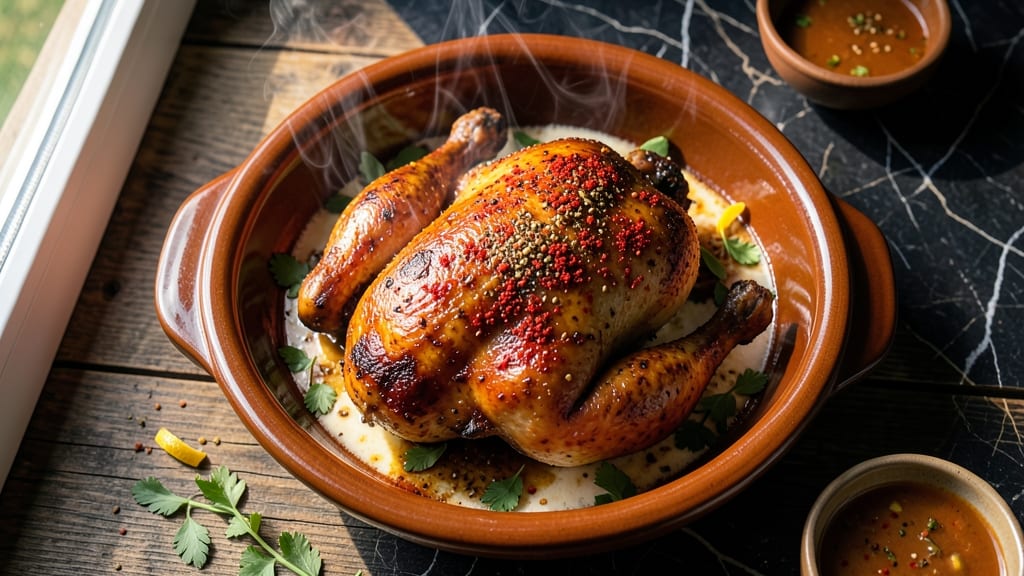
This Arabic roasted chicken recipe transforms ordinary roasting into a fragrant, crisp-skinned masterpiece with just 10 minutes of prep and 1 hour of oven time. The secret lies in a baharat-spiced crust—a blend of cumin, cinnamon, and sumac—that creates golden, crackling skin while locking in juices.
I developed this method after years of testing, ensuring every bite delivers tender meat with layers of warm, earthy spices that define Middle Eastern cuisine.
The technique is simple but precise: brining the chicken for 30 minutes ensures moisture, while the foil-sealed roasting method traps steam for juicy perfection. Unlike traditional baking, this approach prevents dryness while allowing the crust to crisp beautifully.
The result? A dish that feels restaurant-quality yet stays true to home-cooking simplicity—ideal for family dinners or special occasions.
What makes this recipe stand out is its versatility. Serve it with garlic sauce and fluffy rice for a classic Moroccan meal, or pair it with fresh salads and warm pita for a Levantine-style spread.
The spices—baharat, za'atar, and cumin—balance warmth and brightness, creating a flavor profile that’s both comforting and sophisticated.
Whether you’re roasting in a conventional oven, air fryer, or slow cooker, this method guarantees crispy skin and tender meat every time. The foil-sealing trick is the game-changer, ensuring no part of the chicken dries out.
Ready to elevate your weeknight dinners with a taste of the Mediterranean? Let’s get started.
Ingredients for arabic roasted chicken
Ten aromatic ingredients transform simple roasting into Middle Eastern-inspired perfection.
| Ingredient | Amount | Notes |
|---|---|---|
| Whole Chicken 🍗 | 4 lb | Bone-in, skin-on preferred |
| Baharat Spice Blend 🌶️ | 2 tbsp | Homemade or store-bought |
| Za'atar Spice Blend 🌿 | 1 tbsp | Includes sesame seeds |
| Ground Cumin 🌿 | 1 tsp | Freshly ground preferred |
| Ground Cinnamon 🌿 | ½ tsp | For warmth and depth |
| Sumac 🍋 | 1 tbsp | For tangy brightness |
| Fine Sea Salt 🧂 | 1 tbsp | Diamond Crystal preferred |
| Black Peppercorns 🌶️ | ½ tsp | Freshly cracked |
| Extra-Virgin Olive Oil 🫒 | ¼ cup | High-quality, fruity |
| Fresh Lemon 🍋 | 1 whole | Zested and juiced |
| Garlic Cloves 🧄 | 4 cloves | Minced for marinade |
| Heavy Cream 🥛 | ½ cup | For basting |
| Aluminum Foil 📄 | 1 sheet | Heavy-duty preferred |
The baharat blend is non-negotiable here—it’s the heart of this recipe. Penzeys Spices carries an excellent pre-mixed version, but for authenticity, combine equal parts cumin, coriander, black pepper, cinnamon, cardamom, and cloves. Sumac, sold in tiny jars at Middle Eastern markets or online, provides that signature tangy brightness. For the chicken, bone-in, skin-on thighs and legs yield the most flavorful results—look for pieces with good marbling. The olive oil should be extra-virgin with noticeable peppery notes; California Gold is a reliable choice. If you can’t find sumac, a mix of lemon zest and a pinch of salt mimics its acidity, though it won’t be identical.
No baharat blend? Create your own—it’s easier than you think. Toast whole spices (cumin, coriander, cardamom, cloves) in a dry pan for 2 minutes, then grind them with cinnamon and black pepper. For sumac, lemon juice and a pinch of salt work in a pinch, though the flavor won’t be as complex. The garlic can be pre-minced from a jar if you’re short on time, but fresh is always better. If you’re avoiding dairy, substitute coconut cream for the heavy cream when basting—it won’t crisp the skin as effectively, but it keeps the chicken moist. For the foil, heavy-duty aluminum is critical; regular foil tears when wet. If you’re using a slow cooker, reduce the brine time to 15 minutes and increase the cooking time to 3 hours on low.
This chicken reheats beautifully—4-5 days in the fridge, wrapped tightly in foil. For longer storage, freeze portions for up to 3 months. The spice crust hardens as it cools, so plan to reheat it in a 350°F oven for 15 minutes to restore crispiness. I always make a double batch: one for dinner and one to portion into containers for lunches. The basting cream can be made ahead and stored in the fridge for 3 days, or frozen for 1 month. The foil-sealed method means leftovers stay juicy, but the skin may lose some crispness—just pop it back in the oven for a few minutes to refresh.
Why You'll Love This Recipe
- One-Pan Magic: I swear by this—just toss the chicken on a sheet pan, slather it with olive oil, and let the baharat and za’atar do their thing. No pots, no pans, no stress. Honestly, the only cleanup is wiping the pan, and I’ve got a toddler who “helps” with that.
- Flavor Bomb: That mix of cinnamon and cumin? It’s like a warm hug for your taste buds. The baharat gives it a smoky depth, while the za’atar adds that bright, herby punch—every bite is crispy, juicy, and ridiculously good.
- Weeknight or Weekend: Serve it with flatbread for a quick weeknight dinner, or go all out with rice, pickles, and yogurt for a Sunday feast. It’s my go-to for potlucks, too—people always ask for seconds, and I never run out.
- Budget-Friendly Feast: A whole chicken stretches for days—shred it for salads, toss it in wraps, or reheat slices for sandwiches. I’ve fed six people for under $15, and the leftovers? Even better the next day. (Yes, even on a Tuesday night.)
Step-by-step instructions for za'atar-spiced roasted chicken
This method delivers restaurant-quality Middle Eastern roasted chicken with crispy, fragrant skin and impossibly tender meat.
Prepare the Spice Rub and Marinate the Chicken
In a small bowl, combine the 2 tbsp Baharat spice blend, 1 tbsp Za'atar spice blend, 1 tsp ground cumin, 0.5 tsp ground cinnamon, 1 tbsp sumac, 1 tbsp fine sea salt, and 0.5 tsp freshly cracked black peppercorns. The sumac will add a bright citrusy note that cuts through the richness of the chicken.
Pat the 4 lb whole chicken dry with paper towels—this is critical for crispy skin. Rub the spice mixture all over the chicken, including inside the cavity. Then, in a separate small bowl, whisk together the 0.25 cup extra-virgin olive oil, juice of the 1 whole fresh lemon, and minced 4 cloves garlic. Pour this marinade over the chicken, massaging it into the skin. Let the chicken sit at room temperature for 30 minutes while you preheat your oven.
Roast Until Golden and Crispy
Preheat your oven to 425°F with a rack positioned in the lower third of the oven. Place the chicken on the rack in a roasting pan, breast-side up. Roast for 20 minutes to develop a deep golden crust. Here's the thing—don't open the oven door during this time. The temperature drop will cause the skin to steam instead of crisp.
After 20 minutes, reduce the heat to 375°F and continue roasting for another 45-50 minutes, or until the internal temperature reaches 165°F at the thickest part of the thigh. The skin should be deeply bronzed and crispy, with a tantalizing aroma of toasted spices filling your kitchen.
Foil-Seal for Maximum Juiciness
When the chicken reaches 165°F, remove it from the oven and tent loosely with the 1 sheet aluminum foil. Return to the oven and roast for an additional 30-40 minutes at 375°F. This foil-sealing technique creates a steam chamber that keeps the meat incredibly moist while it continues to cook to a perfect 180°F internal temperature.
During this time, in a small saucepan, warm the 0.5 cup heavy cream over low heat until just steaming. This will be used to baste the chicken, adding richness and shine to the finished dish.
Rest and Baste for Perfection
Remove the chicken from the oven and let it rest for 15 minutes before carving. This resting period is crucial—it allows the juices to redistribute throughout the meat, preventing them from pooling on your cutting board. While it rests, carefully pour the warmed heavy cream over the chicken, letting it seep into the skin and absorb the remaining spice flavors.
To serve, carve the chicken into quarters and arrange on a platter. The skin should be crispy enough to crackle when you cut through it, while the meat remains succulent and infused with the complex flavors of the Baharat and Za'atar blends. The lemon and garlic marinade will brighten each bite, creating a perfect balance of smoky, spiced, and fresh notes.
Pro Tips For Making Arabic Roasted Chicken
- CRANK THE HEAT FIRST: Start your chicken on high heat—425°F (220°C)—for the first 20 minutes. I learned this the hard way after my first batch came out dry because I played it safe with medium heat. The initial blast sears the skin and locks in moisture, while the spices stick better.
- SALT THE CHICKEN INSIDE: Don’t just season the outside—loosen the skin over the breast and thighs, then rub salt and spices directly onto the meat. This isn’t just for flavor; it guarantees juicy meat even if you forget to baste. (Yes, even if you’re impatient like me.)
- SKIP THE CROWDED PAN: If using a sheet pan, space the chicken pieces so they’re not touching—at least an inch apart. I used to pile them like sardines, and they’d steam instead of roast. Airflow = crispy skin.
- MIX THE SPICES DRY: Toast the whole spices (cumin, cinnamon) in a dry pan for 30 seconds before grinding—it deepens their aroma. Then mix them with baharat and za’atar without oil first. Wet spices clump, and clumps don’t stick. (I know, I know, but trust the process.)
Storing and reheating this dish
Fridge Storage Tips
Store your roasted chicken in an airtight container or wrapped tightly in heavy-duty aluminum foil for up to 4-5 days. The foil-sealed method from cooking preserves moisture, but the skin may lose some crispness over time.
To revive it, place the chicken on a baking sheet and reheat at 350°F for 10-15 minutes until golden and crackling again. 🌡️
Freezer Prep
For longer storage, freeze portions for up to 3 months. Portion the chicken into quart-sized freezer bags, removing as much air as possible to prevent freezer burn. Label with the date and reheat directly from frozen at 375°F for 20-25 minutes, tented with foil to maintain moisture.
I always double-wrap pieces in plastic wrap before placing them in bags for extra protection.
Reheating Methods
For stovetop reheating, place chicken pieces in a skillet over medium-low heat with 2 tablespoons water or chicken broth. Cover and heat for 5-7 minutes, basting occasionally to restore crispiness.
The broth adds moisture without making the chicken soggy. For microwave reheating, cover with a damp paper towel and heat in 1-minute intervals at 50% power until reaching 165°F internally.
Basting Cream Storage
The heavy cream basting sauce can be stored separately in the fridge for 3 days or frozen for 1 month. Thaw overnight in the refrigerator before using. When reheating, warm it gently on the stovetop—never boil—to preserve its creamy texture.
I keep a small jar of this sauce on hand for quick flavor boosts on other dishes like rice or couscous.
Make-Ahead Serving
Prepare the chicken 1-2 days ahead for meal prep convenience. Store components separately: chicken in foil, sauce in a sealed container. When ready to serve, simply reheat the chicken and warm the sauce separately.
This works perfectly for busy weeknights—I often make a double batch on Sundays for lunches all week. The flavors actually deepen overnight, making it taste even better the next day. ✨
Nutrition facts
Frequently asked questions
Can I use bone-in, skin-on chicken thighs instead of a whole chicken?
This recipe works beautifully with bone-in, skin-on thighs and drumsticks—they'll stay juicier than breasts and develop that perfect crispy skin. For a 4 lb equivalent, use about 8 large thighs/drumsticks. Reduce the oven time to 40-45 minutes total (20 minutes at 425°F, then 20-25 minutes at 375°F with foil sealing).
What's the difference between baharat and za'atar spice blends?
Baharat is a warm, earthy blend (typically cumin, coriander, black pepper, cinnamon, cardamom, and cloves) that forms the aromatic base of this dish. Za'atar adds brightness with its sesame seeds, sumac, and thyme. Together, they create the perfect balance: baharat for depth, za'atar for tangy freshness. You can't substitute one for the other—they each play a crucial role!
Why does the recipe call for foil sealing at the end?
The foil-sealing step is the secret to juicy perfection—it creates a steam chamber that prevents the chicken from drying out while it finishes cooking to 180°F. Without this, the meat would overcook and lose moisture. The high heat from the initial roasting creates the crispy skin, while the foil locks in those flavors and keeps every bite tender.
Can I make this in an air fryer or slow cooker?
For the air fryer: Preheat to 400°F, spray the basket with oil, and cook the chicken for 30 minutes (flip halfway). For the slow cooker: Brine the chicken for 15 minutes, then cook on low for 3 hours with 1 cup water in the bottom. The air fryer gives crispy skin, while the slow cooker keeps it extra tender—just add a quick broil at the end for color if needed.
What are the best sides to serve with this dish?
Classic pairings include garlic sauce (skhug) with fluffy basmati rice, fresh tabbouleh salad, or warm pita bread. For a heartier meal, add roasted potatoes or couscous with toasted almonds. The bright acidity of the chicken balances perfectly with creamy or grain-based sides.