
Main Courses
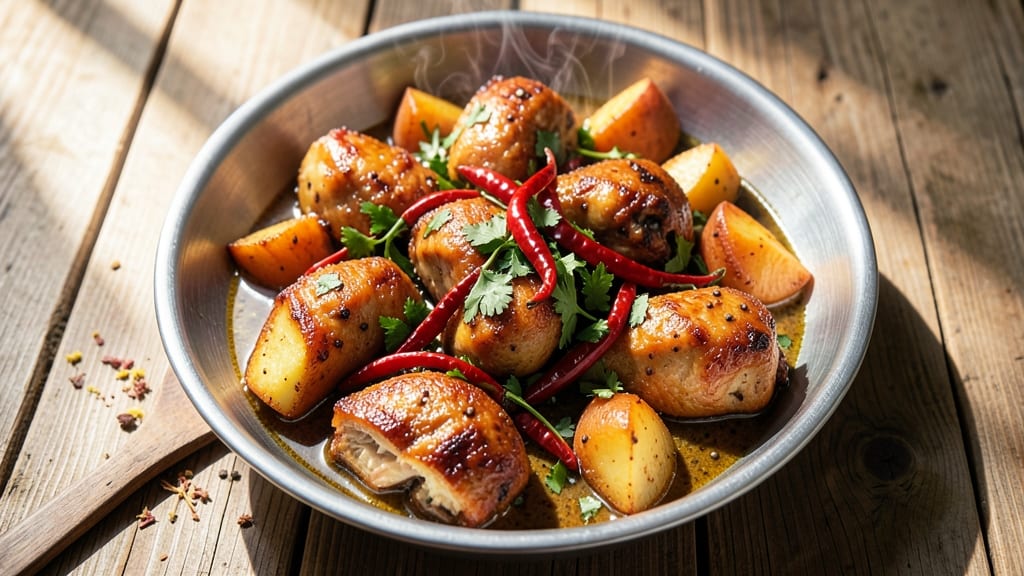
This aloo chicken salan recipe transforms simple ingredients into a rich, aromatic stew where tender chicken and potatoes simmer in a tangy tamarind-infused gravy. The secret lies in layering spices—mustard oil, poppy seeds, and green chilies—creating depth that balances the dish's natural sweetness and acidity.
I developed this recipe after years of perfecting the art of South Indian curries, where every spoonful delivers a harmony of textures and flavors.
The magic begins with a tempering of whole spices in hot oil, releasing their essential oils before the chicken and potatoes join the pot. Tamarind paste adds that signature tangy twist, while coconut milk lends creaminess without overpowering the dish.
What makes this recipe special is its versatility—it’s hearty enough for a weeknight dinner but elegant enough for special occasions.
By the time you serve this aloo chicken salan, your kitchen will smell like a bustling South Indian home, and your taste buds will be rewarded with a gravy that’s rich yet balanced—savory from the chicken, earthy from the potatoes, and bright from the tamarind.
The dish pairs perfectly with steamed basmati rice or warm roti, making it a complete meal in one pot.
This recipe is designed to be approachable yet impressive, with step-by-step instructions that guide you through marinating (if using), sautéing spices, and simmering the gravy to perfection. Whether you're a seasoned cook or a beginner, the techniques are straightforward, and the results are undeniably satisfying.
Ingredients for aloo chicken salan
The heart of South Indian flavors—where spices sing and tamarind dances with chicken and potatoes.
| Ingredient | Amount | Notes |
|---|---|---|
| Boneless Chicken Thighs 🍗 | 1 ½ lb | Skin-on preferred for flavor |
| Russet Potatoes 🥔 | 2 lb | Medium-sized, peeled and cubed |
| Mustard Oil 🫒 | ½ cup | Or coconut oil for milder taste |
| Poppy Seeds 🌾 | 2 tbsp | Toasted until golden |
| Green Chilies 🌶️ | 4 whole | Slit lengthwise for heat control |
| Tamarind Paste 🍋 | 3 tbsp | Adjust for tanginess preference |
| Coconut Milk 🥥 | 1 can (13.5 oz) | Full-fat for creaminess |
| Onion 🧅 | 1 large | Finely chopped |
| Ginger 🧄 | 1 inch | Fresh, peeled and grated |
| Garlic Cloves 🧄 | 6 cloves | Peeled and minced |
| Turmeric Powder 🌿 | 1 tsp | Freshly ground preferred |
| Cumin Seeds 🌿 | 1 tbsp | Toasted for aroma |
| Coriander Powder 🌿 | 2 tbsp | Freshly ground for best flavor |
| Salt 🧂 | 1 tsp | Adjust to taste |
| Fresh Curry Leaves 🌿 | ¼ cup | Or 1 tbsp dried leaves |
Mustard oil is non-negotiable for that authentic South Indian punch, but if you're sensitive to its bold flavor, coconut oil works beautifully instead. Trader Joe's or Indian grocery stores carry mustard oil in bottles—look for brands like Kachi Ghani or Patanjali. The poppy seeds? Toast them in a dry pan until they smell heavenly—about 2 minutes—before grinding. Fresh curry leaves are a game-changer, but dried leaves at half the amount won't ruin the dish. For the tamarind paste, San Marzano brand is my go-to, but any good-quality paste works. The key is adjusting to your tang preference—start with 3 tbsp and tweak as you go.
No mustard oil? Coconut oil or ghee keeps the dish rich. Short on poppy seeds? Sesame seeds at the same amount add a different but equally delicious nutty depth. The green chilies can be swapped for red chili powder (1 tbsp)**, but fresh brings the best heat. Tamarind paste too sour? Balance it with 1 tsp jaggery or brown sugar. The chicken thighs should have some skin—it renders flavor as it cooks. If you're using boneless, skinless breasts, marinate them in 1 tbsp yogurt and 1 tsp turmeric for 30 minutes to keep them moist. The potatoes? Medium-sized so they cook through without turning to mush.
This stew tastes even better the next day—3-4 days in the fridge, and it freezes beautifully for up to 3 months. Store with the gravy to keep everything immersed. Reheat gently on low heat, adding a splash of water if it thickens too much. Serve with steamed basmati rice or warm roti—the contrast of textures makes every bite perfect. Leftovers? Double the batch—this disappears fast, especially when you're perfecting the tamarind balance.
Why You'll Love This Recipe
- One-Pot Wonder: I swear by this recipe—just toss the chicken, potatoes, and spices into one pot with the mustard oil, and let it simmer. No chopping boards full of mess, no multiple pans to wash.
- Poppy Seed Magic: Between us, that toasted poppy seed finish is what makes this dish ridiculously good. The nutty crunch cuts through the richness of the chicken, and honestly? It’s the little detail that turns a good meal into something special.
- Lunchbox Hero: I make a big batch on Sundays and pack it for lunches all week—it reheats beautifully, and the potatoes stay tender while the chicken stays juicy. (Yes, even on a Tuesday night.)
- Budget-Friendly Feast: Chicken thighs and russet potatoes stretch this dish to feed four for under $15. The mustard oil adds depth without breaking the bank, and the green chilies give it that bold kick without fancy ingredients.
Step-by-step instructions for South Indian potato and chicken stew
This tangy, aromatic dish comes together in layers—start with the base, build the flavors, then finish with the perfect balance of spice and creaminess.
Prepare the Chicken and Potatoes
Cut the 1.5 lb boneless chicken thighs into 1-inch cubes—keep them uniform so they cook evenly. In a large bowl, toss the chicken with 1 tsp turmeric powder, 1 tsp salt, and 2 tbsp coriander powder. Let it marinate for 15 minutes while you prep the potatoes.
Peel and cut the 2 lb russet potatoes into 1-inch cubes, then soak them in cold water for 10 minutes to remove excess starch. Drain well before using—they’ll absorb flavors better and stay firm.
Toast the Spices and Aromatics
Heat 0.5 cup mustard oil in a heavy-bottomed pot over medium heat. Add the 1 tbsp cumin seeds and let them sizzle for 30 seconds until they turn golden and fragrant—this is when they release their full aroma. Add the 1 large onion, chopped, and sauté for 5 minutes until translucent.
Stir in the 1-inch ginger and 6 cloves garlic, mincing them into the onions as they cook. Add the 4 whole green chilies, slit lengthwise, and the 0.25 cup fresh curry leaves. Cook for another 2 minutes until the raw smell disappears—this ensures a smooth, aromatic base.
Cook the Chicken and Potatoes
Add the marinated chicken to the pot and sear for 5 minutes on medium-high heat, stirring occasionally. The chicken should turn opaque and release from the pot easily—this ensures it’s fully cooked through. Push the chicken to one side of the pot and add the drained potatoes to the empty space.
Pour in 3 tbsp tamarind paste and 1 can (13.5 oz) coconut milk, stirring gently to combine. Add 2 tbsp poppy seeds and let the mixture simmer for 15 minutes on medium-low heat. The potatoes should be tender but not mushy, and the chicken should be fully cooked through.
Simmer and Balance the Flavors
Once the potatoes are tender, stir the dish well and let it simmer uncovered for 10 minutes to thicken slightly. Taste and adjust the seasoning—add more salt if needed, or a splash of water if the sauce is too thick. The tamarind paste should give it a bright, tangy kick, while the coconut milk adds creaminess.
Garnish with extra fresh curry leaves and serve hot with steamed rice or roti. The stew should have a rich, layered flavor—spicy from the green chilies, tangy from the tamarind, and creamy from the coconut milk. Each bite should be a perfect balance of textures and tastes.
Pro Tips For Making Aloo Chicken Salan
- Marinate Chicken Overnight: I learned this the hard way—rushing the marinade means tough, dry chicken. Use yogurt, lemon juice, and a pinch of turmeric (yes, even if the recipe doesn’t call for it), then let it sit for at least 6 hours. The acid tenderizes the thighs, and the yogurt keeps them moist during cooking.
- Boil Potatoes Until Fork-Tender: Don’t skimp on cooking time—cut potatoes into even 1-inch chunks and boil them until they collapse under a fork. Undercooked potatoes turn to mush later; overcooked ones lose texture. Drain and cool them fully before adding to the gravy (trust me, this prevents a gummy mess).
- Toast Poppy Seeds Low: After burning three batches, I finally figured out: toast poppy seeds on low heat in a dry pan, stirring constantly. They’ll darken in 3–4 minutes, not seconds. High heat = bitter, burnt flavor. Grind them fresh after toasting—pre-ground seeds taste stale.
- Simmer Mustard Oil Slow: Mustard oil’s flavor peaks when infused gently. Heat it on medium-low until it just shimmers (not smoking), then add whole spices. If you rush it, the oil burns and tastes acrid. Remove from heat before adding chilies—cooking them in hot oil makes them bitter.
Health benefits of this recipe
Protein Powerhouse
Aloo chicken salan delivers a high-protein punch with 1.5 lbs of chicken thighs providing about 40 grams of complete protein per serving. This makes it an excellent choice for muscle recovery or a satisfying vegetarian alternative when paired with extra potatoes.
The chicken's skin-on preparation (if using) adds extra flavor while keeping the dish hearty and filling. 💪
Potassium-Rich Potatoes
The 2 lbs of russet potatoes in this recipe contribute over 1,000mg of potassium per serving, supporting heart health and muscle function. Potatoes also provide fiber (about 6 grams per serving) to aid digestion, while their natural sweetness balances the dish's tangy tamarind flavor.
The soaking step removes excess starch, making them lighter and more flavor-absorbent.
Healthy Fats from Oil
While mustard oil adds authentic flavor, it's high in monounsaturated fats that support brain health. For a milder option, coconut oil provides medium-chain triglycerides that boost metabolism.
Both oils are used in moderation—0.5 cup total—so the dish remains balanced. The poppy seeds add omega-3s for anti-inflammatory benefits without overpowering the dish.
Tamarind's Tangy Benefits
The 3 tbsp tamarind paste isn't just for flavor—it's packed with vitamin C (about 15% daily value per serving) and antioxidants that support immunity. Tamarind also aids digestion and helps regulate blood sugar levels.
The tangy profile makes this dish lower in calories than creamy curries while keeping it satisfying and flavorful.
Coconut Milk Creaminess
A single 13.5 oz can of coconut milk adds healthy fats (about 15 grams per serving) that support satiety and nutrient absorption. Unlike heavy cream, coconut milk provides lauric acid, which has antimicrobial properties.
The full-fat version ensures richness without the guilt, making this dish both indulgent and nutritious.
Spice Benefits
The cumin seeds, coriander, and curry leaves in this recipe aren't just for flavor—they're packed with antioxidants and digestive enzymes. Cumin aids digestion, coriander reduces inflammation, and curry leaves help regulate blood sugar. Together, they create a metabolism-boosting flavor profile that keeps the dish both delicious and health-supportive. 🌿
Nutrition facts
Frequently asked questions
Can I use chicken breast instead of thighs for this aloo chicken stew?
Yes, but with adjustments! Chicken breast is leaner, so marinate it in 1 tbsp yogurt and 1 tsp turmeric for 30 minutes to prevent drying out. Cook it on medium-low heat for 8-10 minutes instead of searing, then add potatoes. The skin-on thighs add flavor, but breast works perfectly if you keep the heat gentle.
What makes this dish different from other potato-chicken curries?
Three key elements: mustard oil for that signature South Indian aroma, tamarind paste for tangy depth, and toasted poppy seeds that add nutty richness. Most curries use cream or yogurt, but here, coconut milk creates a lighter, yet equally creamy texture. The layered spices—cumin, coriander, and curry leaves—give it a complex flavor profile too.
How can I adjust the heat level in this recipe?
For milder heat, reduce green chilies to 2 whole or swap them for 1 tbsp red chili powder. For extra spice, add 1 extra chili or a pinch of cayenne. Always taste before serving—you can balance heat with a splash of coconut milk or a pinch of sugar. The tamarind's tang also helps cut through spice.
Can I make this recipe without mustard oil?
Use coconut oil or ghee instead—they’ll give a milder but still rich flavor. If you prefer a different oil, sesame or peanut oil work too, but toast them lightly first to enhance their aroma. The dish will still taste amazing, just with a slightly different profile. Mustard oil is traditional, but versatility is key!
Why do the potatoes need to be soaked before cooking?
Soaking removes excess starch, which prevents the potatoes from turning mushy and helps them absorb the flavors better. After 10 minutes in cold water, drain and pat them dry. This step is especially important for russet potatoes, which can get gluey when cooked in rich gravies. The result? Potatoes that stay firm yet tender with perfect flavor infusion.