
Sauces & Condiments
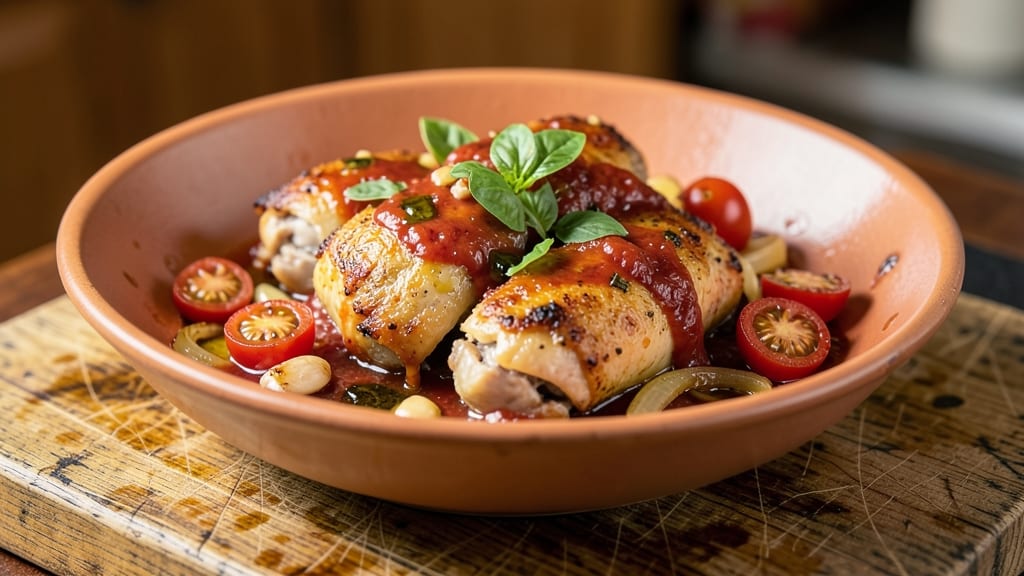
Grandma's chicken cacciatore recipe with tomato sauce brings the heart of Italian home cooking to your kitchen table—simmered in rich, velvety sauce until the chicken falls apart tenderly. I first discovered this recipe among my grandmother's handwritten cards, where she'd scribbled notes about "letting the flavors marry" over low heat.
That patience transforms simple ingredients into something deeply comforting.
The beauty of this dish lies in its simplicity: chicken thighs browned to perfection, tomatoes simmered until they dissolve into sweet, thick sauce, and herbs that infuse every bite with aromatic depth.
My grandmother always insisted on using fresh basil at the end—just a handful torn in, never chopped—because "the leaves should tell their own story." The wine reduces slowly, deepening the sauce's complexity without overpowering the natural flavors.
What you'll end up with is a one-pot wonder that smells like home the moment you walk in the door—golden-brown chicken swimming in a glossy, herb-infused tomato sauce with just the right balance of acidity and sweetness.
The sauce thickens beautifully as it simmers, coating every piece of chicken and promising that first bite will be worth every minute of waiting. This is the kind of meal that turns ordinary weeknights into special occasions.
Serve it with crusty bread to soak up every last drop of that incredible sauce, or pair it with polenta for a heartier dish. The leftovers, if there are any, taste even better the next day as the flavors continue to develop.
Let's bring some of that old-world Italian warmth to your kitchen tonight.
Ingredients for grandma's chicken cacciatore recipe with tomato sauce
Simple Italian pantry staples that transform into a dish smelling like home.
| Ingredient | Amount | Notes |
|---|---|---|
| Chicken Thighs, Bone-In 🍗 | 1 ½ lb | Skin-on for crispiness, cut into 2-inch pieces |
| Extra-Virgin Olive Oil 🫒 | ¼ cup | High quality, fruity variety |
| Yellow Onion 🧅 | 1 whole | Medium size, sliced into half-moons |
| Garlic Cloves 🧄 | 4 cloves | Fresh, peeled and lightly crushed |
| Canned San Marzano Tomatoes 🍅 | 2 cans | 28 oz each, crushed by hand |
| Dry Red Wine 🍷 | ½ cup | Bold, like Chianti or Cabernet |
| Dried Oregano 🍃 | 1 tbsp | Italian variety preferred |
| Fresh Basil Leaves 🌿 | ¼ cup | Torn, not chopped, for garnish |
| Fresh Rosemary 🌿 | ½ tsp | Finely chopped, stems removed |
| Salt 🧂 | 1 ½ tsp | Kosher or sea salt, adjust to taste |
| Black Pepper 🌶️ | ½ tsp | Freshly ground for best flavor |
| Red Pepper Flakes 🌶️ | ¼ tsp | Optional, for heat |
| Tomato Paste 🍅 | 1 tbsp | Squeeze tube works for convenience |
The chicken thighs are the heart of this dish—bone-in, skin-on for that crispy edge. Look for thighs with good marbling at the butcher counter or the meat department. If you can't find bone-in, skin-on, use bone-in, skinless and crisp the skin separately. The San Marzano tomatoes are worth the hunt—they're sweeter and less acidic than regular canned tomatoes. I always grab a few extra cans because they freeze beautifully. For the wine, any bold, dry red works—Cabernet, Chianti, whatever's open in your cabinet.
No San Marzano tomatoes? Crush regular canned tomatoes by hand—it releases more flavor. Dried oregano is a must, but if you're feeling fancy, fresh oregano at double the amount gives a brighter taste. Running low on fresh basil? Dried basil at one-third the amount works in a pinch, though nothing beats the real thing torn in at the end. The tomato paste can be skipped if you're using high-quality crushed tomatoes, but I like it for that extra depth—Trader Joe's squeeze tubes are perfect for this.
This sauce gets better with time, so make a double batch if you can. It keeps for 5 days in the fridge and freezes beautifully for 3 months. I always portion mine into containers so lunches are ready to grab. The chicken reheats well too—just warm it gently in the sauce. Leftovers taste even better the next day as the flavors meld together.
Why You'll Love This Recipe
- No Chopping Chaos: I swear by this recipe because it’s the only one where I can leave the onions whole—peel, halve, and toss them in raw. The skin crisps up golden while the chicken cooks, and honestly? That caramelized onion aroma alone makes the whole thing worth it.
- Tomato Sauce Magic: Between us, San Marzano tomatoes change everything. They’re sweet, meaty, and don’t turn to mush—just rich, velvety sauce that clings to the chicken like it’s been simmering for hours. (Spoiler: It hasn’t.)
- Potluck Proven: This is my secret weapon for gatherings—easy to double, travels well, and no one ever asks, "What’s in it?" before digging in. Serve it over pasta, with crusty bread, or straight from the pan. It’s that adaptable.
- Leftovers That Don’t Suck: The sauce actually improves the next day—deeper, richer, and perfect for quick lunches. I keep a jar in the fridge just for this; reheat it, toss with rice, or stuff it into a sandwich. Zero waste, all flavor.
Step-by-step instructions for grandma's chicken cacciatore
Here's how to bring this classic Italian dish to life with rich, simmered flavors in one pot.
Sear the Chicken Thighs for Deep Flavor
Heat the 0.25 cup extra-virgin olive oil in a large Dutch oven or heavy pot over medium-high heat. Once the oil shimmers but doesn't smoke, add the 1.5 lb chicken thighs, bone-in, skin-side down. Work in batches if needed to avoid crowding the pan.
Sear the chicken for 5-6 minutes per side until the skin is golden brown and crispy, and the internal temperature reaches 165°F. The skin should release easily from the pan when ready. Remove the chicken and set it aside on a plate, leaving all the rendered fat in the pot. This fat is what builds flavor in your sauce.
Build the Flavor Base with Onions and Garlic
In the same pot, reduce the heat to medium and add the 1 whole yellow onion, sliced into half-moons. Cook for 5-6 minutes until the onions soften and begin to caramelize at the edges. This step adds natural sweetness that balances the acidity in the tomatoes.
Add the 4 cloves garlic cloves, peeled and lightly crushed, along with the 1 tbsp tomato paste. Stir for 1-2 minutes until the garlic becomes fragrant and the tomato paste darkens slightly. This ensures the garlic doesn't burn while developing its full flavor.
Deglaze and Simmer the Tomato Sauce
Pour in the 0.5 cup dry red wine and scrape up any browned bits from the bottom of the pot with a wooden spoon. This deglazing step captures all the meaty flavors that would otherwise stick to the pan. Let the wine simmer for 3-4 minutes until it reduces by half.
Add the 2 cans canned San Marzano tomatoes, crushed by hand, along with the 1.5 tsp salt, 0.5 tsp black pepper, 0.25 tsp red pepper flakes, and 1 tbsp dried oregano. Stir well to combine, then return the chicken thighs to the pot, skin-side up. Bring the mixture to a gentle simmer.
Slow Cook Until Tender and Flavorful
Cover the pot and reduce the heat to low. Let the chicken simmer for 45-50 minutes, turning the thighs occasionally, until they're fork-tender and the sauce has thickened slightly. The chicken should pull away from the bone easily when tested with a fork.
Uncover the pot and increase the heat to medium-low. Stir in the 0.5 tsp fresh rosemary and simmer for another 5-7 minutes to allow the flavors to meld. The sauce should coat the back of a spoon and cling to the chicken beautifully.
Finish with Fresh Basil and Serve
Remove the pot from heat and stir in the 0.25 cup fresh basil leaves, torn by hand. Let the dish sit for 5 minutes to allow the basil to infuse its fresh flavor into the sauce. Taste and adjust the seasoning if needed—you might need a pinch more salt or pepper to balance the flavors.
Serve the chicken cacciatore immediately, spooning the rich tomato sauce over each portion. This dish tastes even better the next day as the flavors continue to develop, so it's perfect for meal prep. Pair it with crusty bread or over pasta to soak up every last bit of that delicious sauce.
Pro Tips For Making Grandma'S Chicken Cacciatore Recipe With Tomato Sauce
- Brown the Skin First: Skip the urge to throw everything in at once—pat those bone-in thighs bone dry and sear them skin-side down in a cold pan. After 8-10 minutes of low-and-slow browning (yes, it’ll take that long), you’ll pull out golden, crispy skin that actually tastes like something worth eating. I used to rush this, and the sauce always tasted flat—turns out, flavor starts with the crust.
- Crush Garlic Like a Pro: Don’t mince those cloves—smash them with the flat side of your knife first, then chop. This releases more oils and aroma straight into the pan. My grandmother swore by this, and she was right: the sauce develops depth faster, and you won’t end up with bitter garlic bits clinging to the bottom like a stubborn memory.
- Simmer, Don’t Boil: Once the tomatoes hit the pot, drop the heat to a gentle simmer—think tiny bubbles, not rolling chaos. Boiling turns the sauce into mush and burns the garlic in 10 minutes flat. I learned this the hard way after a dinner where the tomatoes tasted like wallpaper paste. Keep it at medium-low, and stir occasionally to prevent sticking.
- Deglaze with Wine (or Vinegar): After the chicken comes out, don’t just dump in the tomatoes—deglaze the pan with a splash of dry white wine (or white vinegar in a pinch). Scrape up those browned bits with a wooden spoon; that’s where half the flavor hides. I skip this when I’m lazy, but the dish is noticeably better when I don’t—like the difference between black coffee and a latte.
Best sauces and condiments for grandma's chicken cacciatore recipe with tomato sauce
Classic Tomato Sauce
The heart of this dish is that homemade tomato sauce—nothing beats the depth of flavor from San Marzano tomatoes crushed by hand. My grandmother always insisted on using 28-ounce cans because they're sweeter and less acidic than regular canned tomatoes.
For extra richness, I add 1 tablespoon tomato paste at the start to thicken the sauce and deepen the flavor. The key is letting it simmer low and slow—about 45 minutes—so the natural sweetness of the tomatoes really comes through. 🍅
Wine Deglaze Magic
After searing the chicken, I always deglaze the pan with ½ cup dry red wine—Chianti or Cabernet work beautifully. This step captures all those meaty browned bits that stick to the bottom, adding layers of umami to the sauce.
Let the wine reduce by half before adding the tomatoes—this concentrates the flavors and prevents a watery sauce. If you don't have wine, a splash of balsamic vinegar works in a pinch, though the depth won't be the same. 🍷
Herb Infusion
Fresh herbs make all the difference in this dish. I add ½ teaspoon fresh rosemary during the final 5-7 minutes of simmering to infuse its piney aroma. But the real showstopper? ¼ cup fresh basil, torn by hand and stirred in just before serving.
My grandmother swore by this—never chopped, always torn—because it releases its oils more gently. If you're using dried basil, reduce it to ⅓ the amount and add it earlier in the cooking process. 🌿
Spice Balance
For a touch of heat, I add ¼ teaspoon red pepper flakes when combining the tomatoes and spices. This gives the sauce just enough kick without overpowering the natural flavors. If you prefer it milder, skip it entirely or use ½ teaspoon sweet paprika for a smoky depth instead.
The 1 tablespoon dried oregano is non-negotiable—it's the backbone of the flavor profile. 🌶️
Olive Oil Finish
Before serving, I drizzle 1 tablespoon extra-virgin olive oil over the top to add a silky finish. This not only enhances the sauce's richness but also makes it cling beautifully to the chicken.
I always use a fruity, high-quality olive oil—like the one from my local farmers market—because the flavor really shines through. A quick taste test helps me adjust seasoning before serving. 🫒
Make-Ahead Sauce
This sauce gets better with time, so I always make a double batch. The flavors deepen as it sits, making it perfect for meal prep. Store it in an airtight container in the fridge for up to 5 days or freeze it for 3 months.
When reheating, warm it gently on the stove—never microwave—to preserve the texture. The leftovers are even more flavorful the next day! ⏳
Nutrition facts
Frequently asked questions
Can I use chicken breasts instead of thighs for this recipe?
While you can use chicken breasts, thighs are ideal because they stay juicier during the long simmer. If you must use breasts, cut them into 1-inch pieces and reduce the cooking time to 25-30 minutes after they're back in the sauce. They'll dry out faster, so keep an eye on them. For best results, marinate them in olive oil, garlic, and herbs for 30 minutes beforehand.
What's the secret to making the sauce thick and rich?
The sauce thickens naturally as it simmers, but you can help it along by stirring in 1 tablespoon tomato paste at the start and letting it cook uncovered for the last 10 minutes. If it's still too thin, mix 1 teaspoon cornstarch with 2 tablespoons water, stir it in, and simmer for 2-3 minutes until it thickens. My grandmother always said, "Patience is the sauce's best friend."
Can I make this dish in a slow cooker?
Brown the chicken and onions in a skillet first, then transfer everything to a 6-quart slow cooker. Add all ingredients except the fresh basil and rosemary, then cook on low for 4-5 hours or high for 2-3 hours. Stir in the herbs just before serving. The slow cooker keeps everything tender without drying out the chicken.
Why does my chicken cacciatore taste bland?
Bland flavors usually mean the sauce didn't develop enough. Make sure to deglaze the pan with wine to capture all the browned bits, and let the sauce simmer uncovered for the last 10-15 minutes to reduce and concentrate the flavors. Taste as you go—add more salt, pepper, or a splash of balsamic vinegar to brighten it up. Fresh herbs at the end make a huge difference too!
How do I store and reheat leftovers?
Store leftovers in an airtight container in the fridge for up to 5 days or freeze for 3 months. To reheat, warm gently on the stove over low heat with a splash of water or broth to prevent drying. Never microwave—it ruins the sauce's texture. The flavors actually improve overnight, so leftovers often taste even better!