
Main Courses
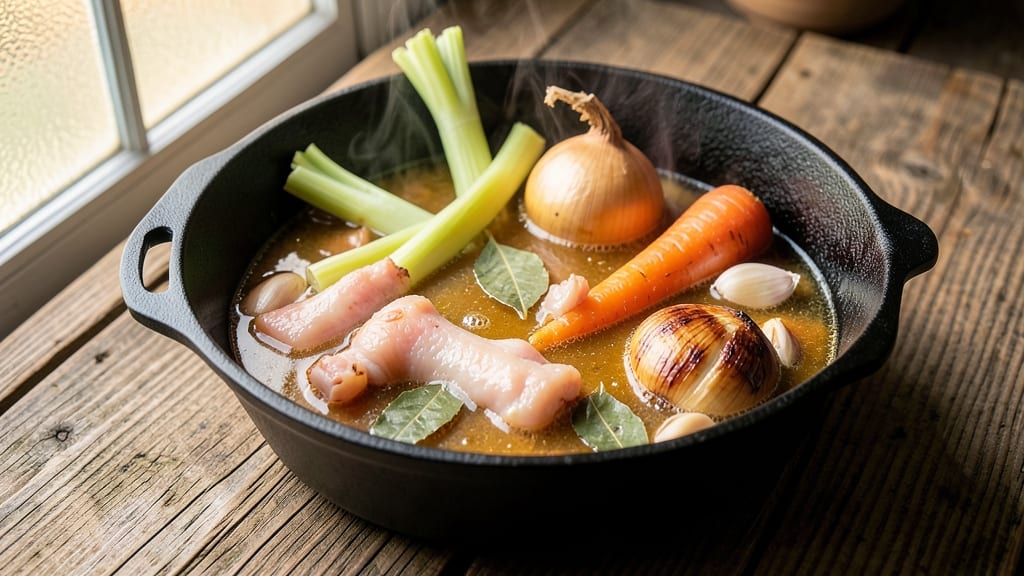
Creating a chicken feet stock recipe unlocks a deep umami richness that transforms ordinary soups and stews into restaurant-quality masterpieces. This isn't just stock—it's a flavor foundation that builds complexity layer by layer through slow simmering.
I learned the hard way that proper preparation (cleaning, blanching, and simmering time) makes all the difference between good stock and extraordinary stock.
The secret to exceptional flavor lies in the process: starting with clean, blanched chicken feet prevents bitterness while extracting maximum gelatin and collagen. A 6-8 hour simmer at low heat breaks down connective tissue into silky richness, while skimming foam and adding aromatics like bay leaves and peppercorns enhances depth.
This isn't a quick process—it's a labor of love that pays off in every sip.
What you'll end up with is a golden, clarified stock so rich it reduces beautifully for sauces or serves as the base for braises. The umami intensity elevates simple dishes—think velvety pho, hearty stews, or braised meats that taste like they simmered all day.
Proper straining and storage (freezing in ice cube trays) preserve its quality for months, making this stock a pantry essential.
For those seeking extra clarity, a simple egg-white clarification method removes impurities while concentrating flavor. Whether you're a home cook or professional chef, this stock becomes the secret weapon in your culinary arsenal. Let's get started on creating your flavor foundation.
Ingredients for chicken feet stock
Clean chicken feet, aromatic vegetables, and slow simmering create restaurant-quality stock.
| Ingredient | Amount | Notes |
|---|---|---|
| Chicken Feet 🦶 | 2 lb | Fresh, cleaned, blanched |
| Yellow Onion 🧅 | 1 whole | Quartered, skin on |
| Carrots 🥕 | 4 whole | Scrubbed, cut into chunks |
| Celery Stalks 🌿 | 4 whole | Cut into 2-inch pieces |
| Garlic Cloves 🧄 | 8 cloves | Smashed, skin on |
| Bay Leaves 🍃 | 4 whole | Dried, standard size |
| Black Peppercorns 🌶️ | 1 tbsp | Crushed, not ground |
| Salt 🧂 | 1 tbsp | Kosher or sea salt |
| Water 💧 | 8 cups | Filtered or spring water |
| Apple Cider Vinegar 🍏 | 2 tbsp | For blanching chicken feet |
| Egg Whites 🥚 | 2 whole | Fresh, for clarification |
| Extra-Virgin Olive Oil 🫒 | 1 tbsp | For finishing after straining |
The chicken feet are the star—fresh, not frozen, and properly cleaned is non-negotiable. Asian markets or specialty butchers are your best bet for quality; look for feet that are plump and free of any strong odor. If you can't find fresh, frozen works in a pinch, but thaw them overnight in the fridge. The blanching step (vinegar bath) removes impurities and prevents bitterness—don't skip it. For aromatics, organic carrots and celery add subtle sweetness, but conventional works fine. The garlic? Smash those cloves—skin on—for deeper flavor infusion during simmering.
No chicken feet? Pork trotter stock is a worthy substitute, though the flavor profile shifts slightly. Short on bay leaves? Dried thyme at half the amount works, but the earthy aroma of bay leaves is irreplaceable here. Vinegar for blanching? Lemon juice or white wine vinegar both work—just adjust to taste. The egg whites for clarification are optional but transform this from good stock to extraordinary. If you're skipping clarification, strain through a fine-mesh sieve or cheesecloth for the cleanest result. And for the love of umami, never use pre-minced garlic—smash those cloves fresh.
This stock tastes better the next day as flavors meld, so plan ahead. Store in glass jars or airtight containers in the fridge for up to 5 days or freeze in ice cube trays for up to 6 months. For maximum clarity, freeze the stock in layers, leaving space for expansion. Once thawed, skim any congealed fat before using. The golden, rich stock reduces beautifully for sauces or serves as the base for braises—always keep some reserved for when you need that umami punch in a hurry.
Why You'll Love This Recipe
- No Chopping Chaos: I swear by the "mirepoix hack" here—just roughly chop the onion, carrots, and celery into 1-inch chunks. No fancy dice work, no knife skills required. The chicken feet do all the heavy lifting while you stir occasionally.
- Umami Bomb: Between us, the chicken feet alone turn this into a flavor powerhouse—think deep, savory richness you’d pay $20 for in a restaurant. Add that caramelized garlic at the end? Pure satisfaction in a pot.
- Pantry-to-Pot Magic: Honestly, this stock is my secret weapon for lazy Sundays or last-minute dinner parties. Freeze half for next week’s ramen or soup, and boom—you’ve got a backup plan without extra effort.
- Budget Goldmine: A pound of chicken feet runs $3 at my local Asian market, and one batch stretches to four meals. That’s $0.75 per serving for stock that makes everything taste like you slaved over it. (Spoiler: I didn’t.)
Step-by-step instructions for crafting chicken feet stock
Here's how to extract maximum umami from humble chicken feet into a velvety, aromatic stock.
Blanch the Chicken Feet to Remove Impurities
Place the 2 lb chicken feet in a large stockpot and cover with cold 8 cups water. Add the 2 tbsp apple cider vinegar and bring to a boil over high heat. Once boiling vigorously, reduce to a simmer and cook for 15 minutes. This blanching step removes any surface impurities and helps extract collagen-rich gelatin later.
Here's the thing—you'll see foam rise to the surface. Skim this off thoroughly with a fine-mesh strainer or ladle. The cleaner your stockpot remains, the clearer and more refined your final stock will be. After 15 minutes, drain the blanching water completely—don't pour it down the drain yet, as it contains valuable gelatin. Set it aside temporarily.
Build the Flavor Base with Aromatics
Return the blanched chicken feet to the now-empty stockpot. Add the 1 whole yellow onion (quartered), 4 whole carrots (cut into chunks), 4 whole celery stalks (cut into 2-inch pieces), 8 cloves garlic (smashed), 4 whole bay leaves, 1 tbsp crushed black peppercorns, and 1 tbsp salt. The combination of these vegetables creates the classic "mirepoix" foundation that forms the backbone of any great stock.
Now pour in the reserved blanching liquid from earlier—this adds critical gelatin content that thickens the stock beautifully. Add enough fresh water to just cover all ingredients completely, leaving about 1 inch of headspace. Bring everything to a full boil over medium-high heat, then immediately reduce to a gentle simmer. This is where patience becomes crucial—you want just a few bubbles breaking the surface, not a rolling boil.
Simmer for Maximum Gelatin Extraction
Cover the pot and maintain this gentle simmer for 3 hours. Here's the science: prolonged simmering at 180-200°F breaks down collagen in the chicken feet and vegetables, releasing gelatin that gives your stock its signature body. You'll notice the liquid gradually darkens and develops an intense aroma—this is your stock developing its umami depth.
I recommend checking the stock after 2 hours to ensure it's not boiling vigorously. If it's too active, reduce the heat further. The reason we wait this long is that chicken feet contain more collagen than bones, which requires extended cooking to fully render. Don't rush this step—rushing leads to cloudy stock with less body. After 3 hours, remove the pot from heat and let it sit for 15 minutes to allow any settled particles to sink.
Clarify the Stock for Crystal-Clear Results
Strain the stock through a fine-mesh sieve or cheesecloth-lined colander into a clean pot. Discard the solids—every last bit of flavor has been extracted. For the clarification step, whisk the 2 whole egg whites in a bowl until frothy. Slowly pour the hot stock through the egg whites while whisking continuously. The egg whites will bind to impurities, creating a cloudy layer on top.
Let the clarified stock sit for 10 minutes, then carefully ladle off the clear liquid from below the egg white layer. The result should be a beautifully clear, golden stock with a rich umami depth. This clarification process is what transforms good stock into exceptional stock—worth the extra effort.
Finish and Store for Maximum Freshness
Return the clarified stock to the pot and stir in the 1 tbsp extra-virgin olive oil. This final touch adds a subtle richness and helps preserve the stock longer. Taste and adjust seasoning—you might need to add a pinch more salt or a few drops of apple cider vinegar to balance the flavors. The stock should be deeply savory with just a hint of sweetness from the carrots.
Let the stock cool to room temperature, then transfer it to airtight containers. It will keep in the refrigerator for up to 5 days or can be frozen for 3 months. This stock forms the perfect base for pho, ramen, or any dish needing that deep, complex umami foundation. The gelatin content makes it especially luxurious when chilled—it develops a beautiful jelly-like consistency that's perfect for garnishing soups.
Pro Tips For Making Chicken Feet Stock
- BLANCH FEET FIRST: Toss the chicken feet in boiling water for 3-4 minutes before adding them to the stockpot—this loosens the gristle and skin, so they release flavor instead of turning the stock murky. I used to skip this and ended up with a cloudy broth that tasted like disappointment.
- CHOP ONIONS COARSELY: No need for tiny dice—roughly quarter the onion and leave the skin on for extra depth. Finely chopped veggies dissolve too fast, leaving the stock flavorless after straining. (Yes, even if you’re impatient like me.)
- SIMMER, DON’T BOIL: Keep the stock at a gentle simmer—tiny bubbles breaking the surface—so the collagen melts into rich gelatin without scorching the garlic or burning the bottom. After burning three batches, I finally figured out: low and slow wins every time.
- SKIP THE GARLIC SKIN: Peel the garlic cloves before smashing them—peeling after crushing just wastes time and leaves bitter bits in the stock. A quick knife tap on the clove’s side cracks it open, making peeling a breeze. (Your future self will thank you.)
Creative variations of chicken feet stock
Asian-Inspired Umami Boost
Transform this stock into a pho broth by adding 1-inch ginger slices, 1 cinnamon stick, and 2 star anise pods during the final 30 minutes of simmering.
For extra depth, stir in 1 tbsp fish sauce and 1 tbsp soy sauce after straining. This Vietnamese-inspired variation creates a bold, aromatic broth perfect for noodle soups. 🌶️
Spicy Cajun Twist
For a Louisiana-inspired version, add 1 tbsp Cajun seasoning (like Tony Chachere's) and 1 tsp smoked paprika with the aromatics. After simmering, blend in ½ cup hot sauce (like Crystal or Tabasco) for a fiery kick. This stock works beautifully in gumbo or jambalaya.
Herb-Infused European Style
Swap the bay leaves for 1 sprig fresh thyme and 1 sprig rosemary tied together with kitchen twine. Add ½ cup white wine instead of vinegar during blanching for a French-inspired profile. Strain through a double-layer cheesecloth for ultra-clarity, ideal for consommé or velouté sauces.
Smoky BBQ Base
Char the onion, garlic, and celery in a dry skillet before adding to the pot for smoky depth. Add 1 tbsp liquid smoke (like Alaskan Smokehouse) and 1 tsp brown sugar during the final 15 minutes.
This stock becomes the perfect base for pulled pork or smoked brisket.
Creamy Mushroom Fusion
After straining, blend in ½ cup sautéed wild mushrooms (like shiitake or cremini) and a splash of heavy cream for a luxurious, creamy stock. Perfect for risottos or mushroom sauces, this variation adds earthy richness. 🍄
Citrus-Infused Brightness
Add zest of 1 lemon and juice of ½ orange during the final 10 minutes of simmering for a bright, citrusy twist. This works beautifully in seafood soups or summer salads** where you want a refreshing contrast to the umami depth. The acidity cuts through the richness perfectly. ❄️
Nutrition facts
Frequently asked questions
Why do chicken feet make such a rich stock?
Chicken feet contain more collagen than bones, which breaks down into gelatin during long simmering. This creates a velvety texture and deep umami flavor that's perfect for soups and braises. The cartilage and connective tissue release rich, savory compounds that transform ordinary broths into something extraordinary.
Can I use frozen chicken feet instead of fresh?
Yes, but thaw them completely in the refrigerator first. Frozen feet work fine, but fresh yields better flavor and clearer stock. If using frozen, add an extra 30 minutes to the simmering time to compensate for the initial cold temperature. Never use partially thawed feet—they can make the stock cloudy.
How do I know when the stock is done simmering?
The stock is ready when it develops a deep golden color and intense aroma after 6-8 hours of simmering. You'll notice the liquid becomes slightly thicker and more opaque from released collagen. Taste it—it should be deeply savory with no bitter aftertaste. The aroma alone is your best indicator of readiness.
What's the best way to store leftover stock?
Store in airtight containers in the fridge for up to 5 days or freeze in ice cube trays for 6 months. For best quality, freeze in layers with space for expansion. When thawing, use the refrigerator method (never at room temperature) to preserve texture and flavor. The gelatin content makes it especially delicious when chilled—it develops a beautiful jelly-like consistency.
Can I make this stock without egg whites for clarification?
Skip the egg whites and strain through a fine-mesh sieve or double-layer cheesecloth for a naturally cloudy but still flavorful stock. While not as clear, it will still have that rich umami depth. For extra clarity, try a roux clarification (equal parts butter and flour) instead. The trade-off is worth it for the restaurant-quality results.