
Main Courses
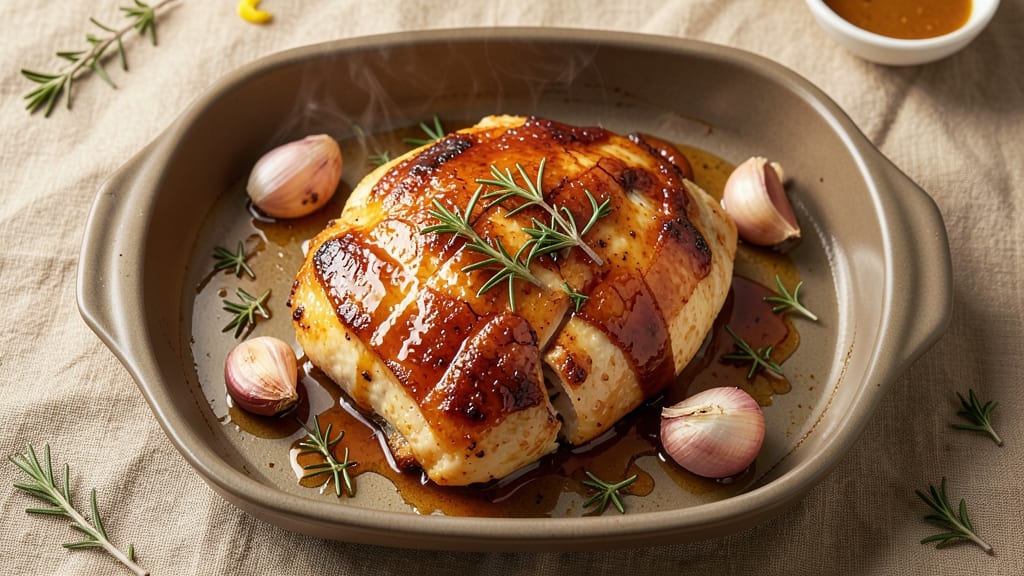
This baked honey glazed chicken breast delivers restaurant-quality results with a sticky-sweet caramelized crust that's impossible to resist. The key lies in balancing tender juicy meat with a perfectly caramelized glaze that doesn't overwhelm—just enough sweetness to complement the savory chicken.
I've perfected this technique after years of testing, ensuring the glaze stays glossy and sticky without making the chicken soggy.
What sets this recipe apart is the two-step process: first marinating the chicken in a flavorful blend of garlic, mustard, and herbs, then baking it with a honey glaze that caramelizes beautifully in the oven.
The result is juicy chicken with crisp edges and a glaze that's rich but not cloying. This method eliminates the mess of stovetop glazing while delivering the same impressive results.
By the time you're done, you'll have golden-brown chicken breasts with a glossy caramelized crust that's perfectly balanced between sweet and savory. The glaze clings to the chicken without dripping, making it ideal for serving whole or sliced.
Each bite offers tender meat with a burst of honey-sweet flavor that's sure to become your new favorite weeknight dinner.
Pair this dish with roasted vegetables or a fresh salad to complete the meal. The glaze works beautifully with any complementary sides, creating a balanced plate that's both impressive and easy to prepare. Let's get started on this foolproof recipe that will elevate your home cooking.
Ingredients for baked honey glazed chicken breast
Four ingredients make the marinade, eight transform it into sticky-sweet perfection.
| Ingredient | Amount | Notes |
|---|---|---|
| Boneless, Skinless Chicken Breast 🍗 | 1 ½ lb | Pounded to even thickness |
| Honey 🍯 | ½ cup | Raw, unprocessed preferred |
| Dijon Mustard 🧂 | 2 tbsp | Not yellow mustard |
| Garlic Cloves 🧄 | 4 cloves | Minced for marinade |
| Fresh Rosemary 🌿 | ¼ cup | Chopped finely |
| Fresh Thyme Leaves 🌿 | ¼ cup | Chopped, stems removed |
| Olive Oil 🫒 | 2 tbsp | Extra-virgin for richness |
| Salt 🧂 | 1 ½ tsp | Kosher or sea salt |
| Black Pepper 🌶️ | ½ tsp | Freshly ground preferred |
| Brown Sugar 🍚 | 1 tbsp | Light or dark variety |
| Apple Cider Vinegar 🍎 | 1 tbsp | For balance |
| Cornstarch 🌾 | 1 tsp | For glaze stability |
The chicken breasts are the foundation—look for even-sized pieces at the grocery store's butcher counter (they're usually pre-pounded). Whole Foods or Trader Joe's often carry the best quality, but any supermarket's fresh chicken works. Pounding them to equal thickness ensures even cooking. I like to score the surface lightly with a knife before marinating—helps the glaze cling better later. Fresh herbs matter here; dried won't give that same bright flavor punch. If you're short on time, frozen chopped rosemary and thyme from the freezer aisle work in a pinch.
No Dijon mustard? Whole-grain mustard at half the amount works, but you'll lose some depth. Substituting honey? Maple syrup or agave both work, but the flavor profile shifts slightly. The vinegar is key for balance—if you're avoiding it, lemon juice at double the amount does the trick. For the glaze, I always use raw honey (the kind that hasn't been pasteurized)—it caramelizes better. If you're making this ahead, prep the marinade first and store it in the fridge for up to 2 days before using.
Marinated chicken keeps 2 days in the fridge, but the glaze is best made fresh. The caramelized crust develops during baking, so don't rush it—10-15 minutes at 375°F is ideal. Leftovers reheat beautifully; cover with foil and warm at 350°F for 10-12 minutes. The glaze thickens as it cools, so if it seems too runny right after baking, let it sit for 5 minutes before serving. Store any extra glaze in the fridge for up to 1 week—great for drizzling on pancakes or toast.
Why You'll Love This Recipe
- Five-Ingredient Magic: I swear by this combo—chicken, honey, mustard, garlic, and rosemary. That’s it. No fancy prep, no hidden pantry staples. The Dijon mustard adds tang, the honey caramelizes into a sticky glaze, and the rosemary? It smells like a holiday dinner even when it’s just me on a Tuesday.
- Crowd-Pleasing Crisp: Between us, this isn’t your sad, dry baked chicken. The edges get that golden, almost brittle crust while staying juicy inside—thanks to the garlic-infused glaze. My picky 14-year-old devours it straight from the pan, and that’s saying something.
- Meal Prep MVP: I make a double batch every Sunday. The glaze keeps the chicken tender for days, and it reheats like a dream—no soggy edges, just that same sticky-sweet flavor. Pack it for lunches, freeze half for emergencies, or serve it cold in wraps. It’s the ultimate lazy-day hero.
- Budget Bright Spot: Chicken breast is affordable, and this recipe stretches it further than plain grilled chicken ever could. A little honey goes a long way, and rosemary lasts weeks in the freezer. Honestly, it’s the kind of dish that makes grocery day feel like a win.
Step-by-step instructions for baked honey glazed chicken breast
Here's how to create that perfect caramelized crust without the sticky mess.
Prepare the Herb Marinade
In a small bowl, whisk together the 0.5 cup honey, 2 tbsp Dijon mustard, 1 tbsp apple cider vinegar, 1 tbsp brown sugar, 2 tbsp olive oil, 1.5 tsp salt, and 0.5 tsp black pepper. This marinade is the flavor foundation, so mix well until the honey and sugar dissolve completely and the mixture becomes smooth.
Next, add the 4 minced garlic cloves, 0.25 cup finely chopped fresh rosemary, and 0.25 cup chopped fresh thyme leaves. Stir gently to combine - you want the herbs to be evenly distributed but not pulverized. Let the marinade sit at room temperature for 10 minutes while you prepare the chicken. This resting time allows the flavors to meld together, creating a more cohesive taste profile.
Pound and Coat the Chicken
Place the 1.5 lb boneless, skinless chicken breast between two sheets of plastic wrap. Using a meat mallet or rolling pin, pound the chicken to an even ½-inch thickness throughout. This ensures even cooking and prevents dryness in the center. I press down firmly but evenly - about 10-12 times per side - until the chicken is uniformly flat.
Transfer the pounded chicken to a shallow dish and pour the herb marinade over it. Using clean hands or a silicone spatula, coat the chicken thoroughly on all sides, pressing gently to help the marinade adhere. Let it marinate for at least 30 minutes (or up to 2 hours in the refrigerator) while you preheat your oven. The longer it marinates, the more flavorful the chicken will be.
Create the Glaze Mixture
In a small saucepan, combine the remaining 0.25 cup honey with the 1 tsp cornstarch over medium heat. Whisk continuously for 2-3 minutes until the mixture thickens slightly and becomes syrupy. Remove from heat and let it cool for 5 minutes - this prevents the glaze from cooking too quickly when applied to the chicken.
The cornstarch acts as a stabilizer, helping the glaze set properly without becoming overly sticky. If you prefer a thicker glaze, you can add an additional ½ tsp cornstarch now. Keep this mixture at room temperature while you bake the chicken - it should be thick but still pourable when you're ready to apply it.
Bake to Golden Perfection
Preheat your oven to 375°F. Place the marinated chicken on a parchment-lined baking sheet, ensuring there's space around it for the glaze to spread. Bake for 20 minutes, then carefully flip the chicken over and continue baking for another 10 minutes. The chicken should reach an internal temperature of 165°F at its thickest part.
Here's the key moment: remove the chicken from the oven and immediately brush the cooled glaze mixture evenly over the top. Return to the oven for 3-5 minutes until the glaze bubbles and turns a beautiful amber color. Watch closely - you want it caramelized but not burned. The glaze should coat the chicken completely, creating that signature sticky-sweet crust.
Rest and Serve
Transfer the glazed chicken to a cutting board and let it rest for 5 minutes before slicing. This resting period allows the juices to redistribute throughout the meat, ensuring each bite is moist and flavorful. The glaze will thicken slightly as it cools, which is perfect for serving.
Slice the chicken against the grain into ½-inch thick portions and serve immediately. The exterior should be beautifully caramelized with a glossy sheen, while the interior remains juicy and tender. The combination of sweet honey, tangy vinegar, and aromatic herbs creates a complex flavor profile that pairs perfectly with roasted vegetables or a fresh salad.
Pro Tips For Making Baked Honey Glazed Chicken Breast
- Pound the Chicken Even: I learned this the hard way—skipping this step means dry, rubbery chicken under that sticky glaze. Use a meat mallet or rolling pin to pound breasts to ¼-inch thickness before seasoning. This ensures even cooking and lets the honey glaze caramelize properly instead of pooling on top.
- Prep the Glaze First: Mix your honey, Dijon, minced garlic, and chopped rosemary into a paste before baking—this lets the flavors meld while the chicken cooks. I used to brush it on raw and rush it into the oven, but prepping ahead means a richer, more cohesive flavor (and less mess).
- Start High, Finish Low: Bake at 425°F for 12 minutes to sear the edges, then drop to 375°F for the remaining 15–18 minutes. This two-stage approach prevents the glaze from burning while keeping the inside juicy. (Yes, even if you’re impatient like me.)
- Use a Thin Layer of Oil: Brush the chicken with 1 teaspoon olive oil before adding the glaze—it helps the honey stick and creates a subtle crisp on the edges. I skipped this once and ended up with a sad, clumpy glaze that slid off. Trust me, it’s worth the extra 30 seconds.
Regional styles of these flavors
Southern U.S. Style
In the South, this dish transforms into a honey-buttermilk glaze with a touch of hot sauce for heat. Replace the apple cider vinegar with 1 tbsp buttermilk and add ½ tsp Cajun seasoning to the marinade.
After glazing, brush with a mix of 2 tbsp honey and 1 tbsp hot sauce (like Crystal or Louisiana). Serve with cornbread and collard greens for a true Southern spread. 🌶️
Mediterranean Twist
For a Mediterranean flair, swap the rosemary and thyme for 1 tbsp dried oregano and 1 tsp lemon zest. Use 1 tbsp olive oil in the glaze instead of cornstarch, and add ½ tsp cinnamon for warmth.
Pair with roasted Mediterranean vegetables like bell peppers, zucchini, and red onions. A sprinkle of feta cheese on top adds a salty contrast. 🍯
Asian-Inspired Fusion
Infuse the marinade with 1 tbsp soy sauce and 1 tsp grated ginger for an Asian-inspired version. Replace the honey glaze with a mixture of 3 tbsp honey, 1 tbsp rice vinegar, and ½ tsp sesame oil.
Garnish with toasted sesame seeds and serve over steamed jasmine rice with stir-fried bok choy. The balance of sweet and umami is unbeatable. 🌟
Herb-Forward European
In European kitchens, this dish often features tarragon and chives instead of rosemary and thyme. Use 1 tbsp fresh tarragon and 2 tbsp chopped chives in the marinade. For the glaze, add 1 tsp Dijon mustard and a splash of dry white wine (like Sauvignon Blanc).
Serve with roasted potatoes and sautéed green beans for a classic French-inspired meal. ✨
Spicy Caribbean Version
For a Caribbean kick, add 1 tbsp scotch bonnet pepper (or jalapeño) to the marinade and 1 tsp smoked paprika to the glaze. Use dark brown sugar for depth and finish with fresh cilantro.
Serve with coconut rice and grilled pineapple for a tropical feast. The heat balances beautifully with the sweet glaze. 🔥
Nutrition facts
Frequently asked questions
Can I use boneless, skin-on chicken breast instead?
Yes, but you'll need to adjust the cooking time slightly. Skin-on breasts take about 5-7 extra minutes to cook through, so plan for 30-35 minutes total at 375°F. Remove the skin before glazing to prevent it from burning too quickly. The skin can also make the chicken less tender if not handled carefully.
What if my glaze becomes too runny after baking?
This happens when the glaze isn't thickened enough or the chicken releases too much moisture. To fix it, mix ½ tsp cornstarch with 1 tsp cold water and brush it over the chicken, then return to a 350°F oven for 2-3 minutes to set. For next time, reduce the honey by 1 tbsp or add ½ tsp cornstarch to the glaze mixture before baking.
How do I keep the chicken from drying out?
Pounding the chicken to an even ½-inch thickness is key, as is marinating for at least 30 minutes (longer = juicier). Don't overcook! Use a meat thermometer and remove the chicken when it hits 165°F at its thickest part. The glaze adds moisture, but avoid opening the oven door too often during baking.
Can I make this recipe ahead of time?
Marinate the chicken up to 2 days ahead and store it in the fridge. For the glaze, make it fresh the day of baking, but you can prep the honey-cornstarch mixture 1 day ahead and store it in the fridge. Reheat the glaze gently before using. The chicken reheats beautifully—cover with foil and warm at 350°F for 10-12 minutes.
What's the best way to serve this dish?
This honey-glazed chicken pairs perfectly with roasted seasonal vegetables (like Brussels sprouts or asparagus) or a bright citrus salad. For a heartier meal, serve with mashed sweet potatoes or wild rice pilaf. The glaze also works well as a drizzle over grilled shrimp or toasted baguette slices for a quick appetizer.