
Soups & Stews
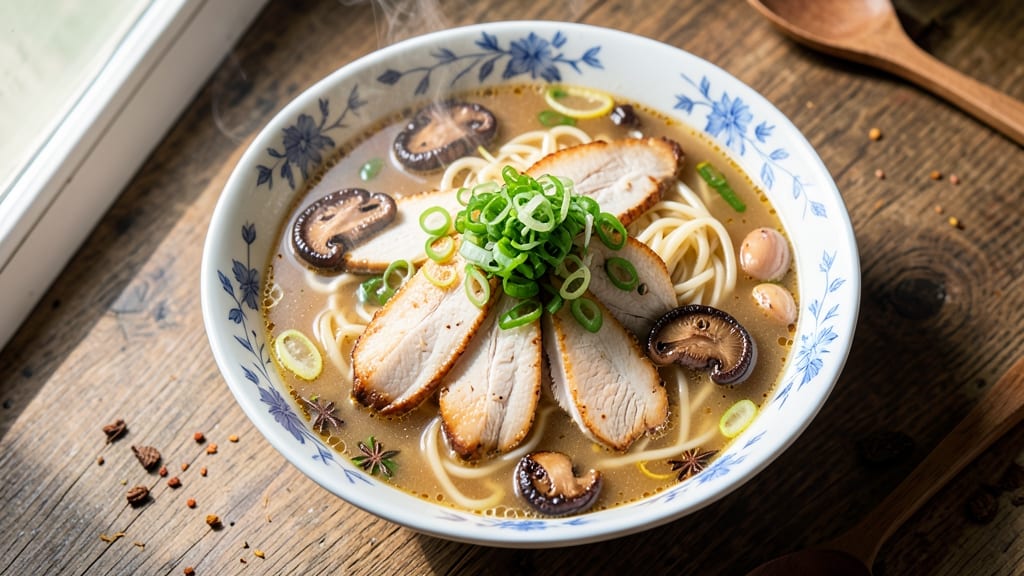
This Asian-style chicken noodle soup transforms a simple weeknight meal into a fragrant, comforting experience with just a few key ingredients. The secret lies in the aromatic broth—star anise, ginger, and garlic simmered until the kitchen fills with warm, inviting scents.
I’ve perfected this recipe over years of testing, balancing depth of flavor with simplicity so it works for busy weeknights or cozy gatherings.
What sets this recipe apart is the fragrant ginger and star anise broth, which builds layers of warmth without overpowering the tender chicken and chewy noodles. The broth is simmered low and slow, allowing the spices to infuse deeply while keeping the chicken juicy and the noodles perfectly tender.
This isn’t just soup—it’s a full, satisfying meal in one bowl, with optional garnishes like fresh herbs, chili oil, or lime to customize it to your taste.
The result is a restorative, flavorful soup that’s both comforting and elegant, with a broth so rich it’ll have everyone asking for seconds.
The technique is straightforward, but the payoff is a dish that feels like a hug in a bowl—perfect for cold days or when you need a little extra care. Let’s get started on making this nourishing, aromatic masterpiece.
This recipe works beautifully as a standalone dish or alongside steamed dumplings and pickled vegetables for a full Asian-inspired meal. The broth freezes well too, so you can prep ahead and enjoy this comforting soup whenever you need it. Here’s how to make it step by step.
Ingredients for asian style chicken noodle soup
Simple yet aromatic ingredients create this deeply comforting Asian-style chicken noodle soup.
| Ingredient | Amount | Notes |
|---|---|---|
| Chicken Breast 🍗 | 1 ½ lb | Bone-in, skin-on preferred |
| Fresh Ginger Root 🧄 | ½ cup | Peeled, thinly sliced |
| Star Anise Pods 🌿 | 2 whole | Whole, not ground |
| Garlic Cloves 🧄 | 6 cloves | Peeled, smashed |
| Dried Shiitake Mushrooms 🍄 | ¼ cup | Sliced, rehydrated |
| Green Onions 🧅 | 3 whole | White and green parts separated |
| Egg Noodles 🍜 | 8 oz | Fresh or dried, medium width |
| Low-Sodium Chicken Broth 💧 | 4 cups | Homemade or quality store-bought |
| Sesame Oil 🫒 | 1 tbsp | Toasted, for aroma |
| Soy Sauce 🥢 | 2 tbsp | Light or all-purpose |
| Rice Vinegar 🍶 | 1 tbsp | For brightness |
| Fresh Cilantro 🌿 | ¼ cup | Chopped, for garnish |
| Chili Oil 🌶️ | 1 tbsp | Optional, for heat |
| Salt 🧂 | 1 tsp | Kosher or sea salt |
| Black Pepper 🌶️ | ½ tsp | Freshly ground |
The star anise and ginger are non-negotiable for that signature warmth. Whole star anise pods from Penzeys or Asian markets give the best flavor—don't use ground. Fresh ginger is ideal, but if you're using powdered, double the amount. For shiitake mushrooms, dried are essential—they add umami depth that fresh can't match. I always grab bone-in, skin-on chicken from the butcher section for richer flavor, though boneless works in a pinch. The broth is where the magic happens—homemade or high-quality store-bought like Pacific Foods or Swanson makes all the difference.
No fresh ginger? Powdered works at double the amount, but it won't have the same punch. Star anise pods can be swapped for 1 tsp ground star anise, though texture changes. Running out of shiitake? Dried porcini mushrooms in the same quantity work beautifully. The egg noodles should be medium-width—thick ones need more cooking time. For extra depth, add a 1-inch piece of kombu seaweed to the broth while simmering. And if you're feeling fancy, toasted sesame seeds on top add incredible texture.
This soup tastes even better the next day—make a double batch and store leftovers in the fridge for up to 4 days. The broth freezes perfectly for 3 months, so you can prep ahead for busy weeks. I always keep a jar of rehydrated shiitake slices in the fridge for quick soup assembly. The noodles soften as they sit, so if you're reheating, add a splash of water. Garnish with fresh cilantro and chili oil just before serving—those last-minute touches make all the difference
Why You'll Love This Recipe
- No-Fuss Pantry Staples: I swear by this recipe because it uses ingredients I already have—dried shiitake mushrooms and star anise tucked away for "someday." No last-minute grocery runs, no stress. Just pull, soak, and simmer while I handle whatever else life throws at me.
- Umami Bomb Combo: That ginger-garlic-star anise trio? It’s where the magic happens. The mushrooms add deep earthiness, the star anise brings a subtle licorice warmth, and the garlic—oh, the garlic—turns this into something you’ll slurp straight from the pot. No subtlety here, just flavor.
- Lunchbox Hero: Between us, this soup is my secret weapon for meal prep. Toss in some rice noodles, let it cool, and it stays perfect for 4 days. Pack it for work, send it in your kid’s lunch, or eat it cold with chopsticks—it’s that good. (Yes, even on a Tuesday night.)
- Budget-Friendly Powerhouse: Chicken breast stretches further than you’d think when simmered with shiitake broth, and a single star anise pod flavors the whole pot. I make this twice a month and still have change left for takeout. Plus, leftovers taste better the next day—because flavor deepens, not fades.
Step-by-step instructions for Asian style chicken noodle soup
This fragrant broth builds layer by layer—start with aromatics, then work through the broth and finish with delicate garnishes.
Prepare the Chicken and Aromatics
Slice the 1.5 lb chicken breast into ½-inch thick pieces and set aside. In a large pot, combine the 0.5 cup fresh ginger root, 6 cloves garlic cloves, 2 whole star anise pods, and 0.25 cup dried shiitake mushrooms. Add 4 cups low-sodium chicken broth and bring to a boil over medium-high heat. This aromatic base will infuse the broth with deep, warming flavors.
Once boiling, reduce heat to medium-low and let it simmer for 15 minutes—you'll notice the star anise releases its licorice-like aroma and the ginger softens. This step extracts maximum flavor from the aromatics before adding the chicken. Skim off any foam that rises to the surface for a cleaner broth.
Cook the Chicken and Noodles
Add the sliced chicken to the simmering broth and cook for 12-15 minutes until the meat is fork-tender and easily pulls apart. The broth should now have a rich, golden hue from the aromatics. Meanwhile, prepare the 8 oz egg noodles according to package instructions—al dente is key here, so cook them 1 minute less than recommended.
While the chicken finishes cooking, separate the 3 whole green onions into white and green parts. Reserve the whites for the broth and finely chop the greens for garnish. The white parts will add subtle sweetness to the broth, while the greens bring freshness to each bowl.
Build the Fragrant Broth
Remove the chicken from the pot and set it aside. Strain the broth through a fine-mesh sieve to remove the aromatics and mushrooms, pressing gently on the solids to extract all the flavor. Return the broth to the pot and add the 2 tbsp soy sauce, 1 tbsp rice vinegar, 1 tbsp sesame oil, and the reserved green onion whites. Simmer for 5 minutes to meld these flavors together.
Here's where the magic happens: the soy sauce adds umami depth, the rice vinegar brightens the broth, and the sesame oil infuses a nutty aroma. Taste and adjust seasoning with the 1 tsp salt and 0.5 tsp black pepper—the broth should be balanced between savory and slightly tangy.
Assemble and Garnish
Add the cooked egg noodles to the pot and toss gently to coat them in the fragrant broth. Return the chicken to the pot and heat through for 2-3 minutes—this ensures the chicken absorbs the final flavors without overcooking. Divide the soup among 4 bowls, distributing the noodles and chicken evenly.
Finish each bowl with a drizzle of 1 tbsp chili oil (if using), a sprinkle of 0.25 cup chopped fresh cilantro, and the reserved green onion greens. The chili oil adds a subtle heat, while the cilantro and green onions bring freshness that cuts through the richness of the broth. Serve immediately while steaming hot for the best experience.
Pro Tips For Making Asian Style Chicken Noodle Soup
- Sear the Chicken First: Skip the slow poach—cut the chicken breast into 1-inch chunks, pat them very dry, and sear in a hot pan with 1 tablespoon oil for 3-4 minutes per side until golden. The crust locks in flavor and prevents dryness later, especially since chicken breast is lean. (I used to skip this and ended up with bland, rubbery chicken—don’t make my mistake.)
- Slice Ginger Paper-Thin: Grab a sharp knife and slice the ginger as thin as you can—almost translucent. Toss it directly into the broth while simmering; it’ll infuse flavor without leaving chewy chunks. (Yes, it looks like you’re making noodles, but trust me, this is how the pros do it.)
- Don’t Crowd the Pot: Add the chicken and shiitake mushrooms to the broth after it’s boiling, then space them out so they float freely. Overcrowding steams the chicken instead of simmering it, and the mushrooms turn soggy. (I learned this when my first batch came out like a sad, waterlogged stew.)
- Toast the Star Anise: Dry-toast the star anise pods in the pot for 30 seconds before adding liquid—just until you smell that warm, resinous aroma. This deepens the anise flavor without bitterness. (Sounds weird, but it works: the difference is noticeable if you’ve ever used raw pods.)
Best sauces and condiments for this recipe
Umami Boost
Start with a splash of dark soy sauce (like Lee Kum Kee) instead of light soy—it adds deeper color and richer umami without overpowering. I use 1 tablespoon in the broth base, then finish each bowl with ½ teaspoon for a glossy sheen.
For extra depth, add 1 teaspoon of fish sauce (like Red Boat) to the broth—it enhances the savory notes while keeping the dish vegetarian-friendly if preferred.
Bright Acid Balance
Rice vinegar is key, but don’t stop there! Add ½ teaspoon of mirin or 1 teaspoon of rice wine to the broth for a subtle sweetness that rounds out the flavors.
For a tangier kick, swap the rice vinegar for 1 tablespoon of yuzu juice (or sub with lemon juice). The acidity brightens the broth and cuts through the richness of the chicken and noodles.
Spicy Finishing Touches
Chili oil is a must, but elevate it with 1 teaspoon of chili crisp (like Lao Gan Ma) for texture and heat. For a smoky twist, add ½ teaspoon of gochujang (Korean chili paste) to the broth while simmering.
If you love heat, drizzle with Sichuan peppercorn oil—it adds a tingling sensation that pairs perfectly with the soup’s warmth.
Herb Infusions
Swap cilantro for Thai basil or mint for a fresher, more aromatic finish. I like to bruise the herbs slightly (by gently crushing them in my palm) before adding them to the broth for 5 minutes before serving—this releases their oils and intensifies their flavor.
A sprinkle of toasted sesame seeds adds crunch and nutty depth that balances the soup’s soft textures.
Sweet-Savory Glaze
For a touch of sweetness, drizzle each bowl with 1 teaspoon of honey or maple syrup before adding the chili oil. Alternatively, stir 1 tablespoon of hoisin sauce into the broth for a sticky, slightly sweet contrast.
This works especially well if you’re serving the soup with steamed dumplings—the sweetness bridges the gap between the two dishes beautifully.
Nutrition facts
Frequently asked questions
Can I use chicken thighs instead of breast for this recipe?
Chicken thighs add incredible richness and stay juicier than breast meat. Use 1.5 lb bone-in, skin-on thighs instead, and increase the simmering time to 18-20 minutes for tender results. The skin will crisp beautifully when browned first—just remove it before adding to the broth if you prefer a cleaner presentation.
How do I make this soup vegetarian?
Swap the chicken for 1 lb shiitake mushrooms (sliced) and 1 block firm tofu (pressed and cubed). Simmer the mushrooms in the broth for 10 minutes first to build umami, then add tofu for the final 5 minutes. Boost the broth with 1 tsp fish sauce (for depth) or 1 tbsp soy sauce—both work well. The star anise and ginger will still shine in a plant-based version!
Can I substitute fresh ginger with powdered?
Yes, but adjust the amount! Use 2 tsp powdered ginger (about double the fresh amount) and add it directly to the broth when you bring it to a boil. Fresh ginger has more complex layers of flavor, but powdered works in a pinch. For best results, toast the powdered ginger in a dry pan for 30 seconds to enhance its aroma before adding to the broth.
Why does my broth taste bitter?
Bitterness usually comes from overcooking the aromatics or using too much soy sauce. Skim foam carefully during the 15-minute simmer to prevent bitterness from developing. For the soy sauce, start with 1 tbsp and taste—add more gradually. If the broth still tastes bitter, balance it with 1 tsp rice vinegar or a pinch of sugar. Fresh herbs like cilantro can also help mask bitterness when garnishing.
What's the best way to reheat leftovers?
Reheat gently on the stovetop over low heat with a splash of water or broth to prevent drying out. For microwave reheating, cover with a damp paper towel and heat in 30-second intervals, stirring between each. Add a pinch of salt and a drizzle of sesame oil after reheating to restore freshness. The noodles will soften further, so they're best enjoyed the same day or within 2 days of cooking.