
Main Courses
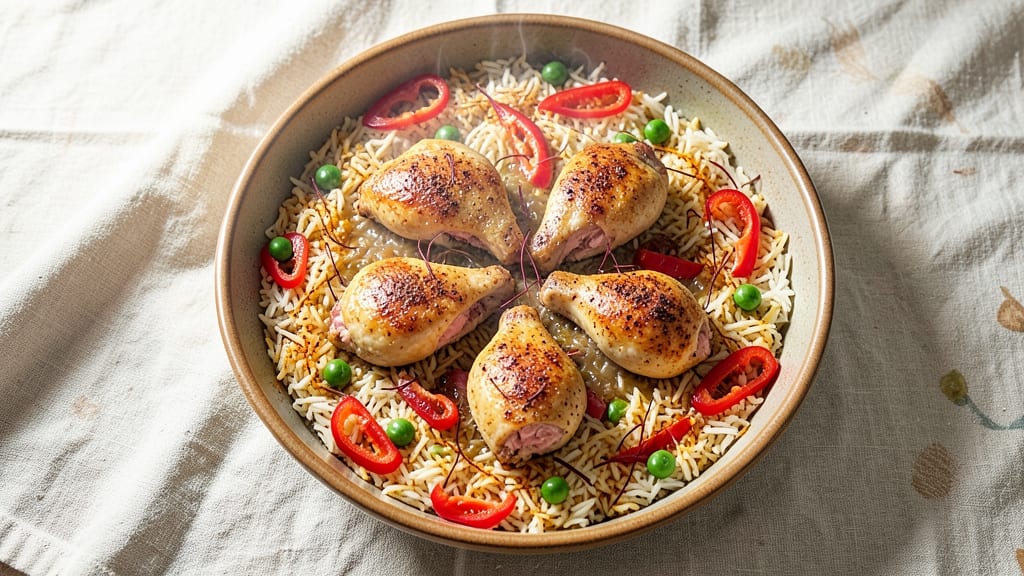
This baked chicken paella recipe delivers restaurant-quality Spanish flavors with a crispy socarrat crust and foil-sealed juiciness that keeps every bite tender. The secret lies in layering pre-cooked chicken, saffron-infused rice, and vibrant vegetables, then baking until the bottom transforms into a golden, caramelized masterpiece.
Unlike traditional stovetop paella, this method simplifies the process while preserving all the signature depth of flavor.
The recipe balances smoky paprika, bright saffron, and aromatic sofrito for a dish that’s both authentic and approachable. You’ll start with chicken thighs seared and pre-cooked to ensure they stay juicy, then layer them with rice, bell peppers, peas, and chorizo for a modern twist.
The foil-sealing technique locks in moisture while the final bake creates that coveted crispy bottom—socarrat—that paella lovers crave.
What makes this recipe stand out is its foolproof approach to achieving perfect rice texture without constant stirring. The saffron infuses the rice with its signature golden hue and nutty aroma, while the foil ensures the chicken remains succulent.
By the time it emerges from the oven, you’ll have a dish that’s visually stunning, packed with flavor, and ready to impress—whether for a family dinner or a special occasion.
For those who love tradition but want flexibility, this recipe works with or without seafood, making it adaptable to dietary preferences. The instructions guide you through every step, from prepping the chicken to achieving that perfect socarrat. Ready to elevate your paella game? Let’s get started.
Ingredients for baked chicken paella
Authentic Spanish flavors meet modern convenience with these carefully chosen ingredients.
| Ingredient | Amount | Notes |
|---|---|---|
| Chicken Thighs, Bone-In 🍗 | 1 ½ lb | Skin-on, trimmed of excess fat |
| Long-Grain White Rice 🍚 | 1 ½ cups | Bomba or Calasparra preferred |
| Saffron Threads 🌼 | ¼ tsp | High-quality, Spanish saffron |
| Smoked Paprika 🌶️ | 1 tbsp | Spanish pimentón for authenticity |
| Red Bell Peppers 🍅 | 1 whole | Diced, seeds removed |
| Frozen Peas 🌱 | ½ cup | Thawed, no need to cook |
| Spanish Chorizo 🌭 | 4 oz | Sliced into 1/4-inch rounds |
| Yellow Onion 🧅 | 1 whole | Finely diced, sofrito base |
| Garlic Cloves 🧄 | 4 cloves | Minced for sofrito |
| Extra-Virgin Olive Oil 🫒 | ½ cup | High-quality, fruity variety |
| Chicken Broth 💧 | 1 ½ cups | Low-sodium, homemade preferred |
| Dry White Wine 🍷 | ½ cup | Spanish variety like Albariño |
| Tomato Paste 🍅 | 1 tbsp | San Marzano preferred |
| Bay Leaves 🌿 | 2 whole | Fresh for best flavor |
| Salt 🧂 | 1 ½ tsp | Diamond Crystal preferred |
| Ground Black Pepper 🌶️ | ½ tsp | Freshly ground for best flavor |
| Aluminum Foil 📄 | 1 sheet | Heavy-duty for sealing |
The saffron and Spanish smoked paprika are non-negotiable for authentic flavor—La Boqueria Market or specialty Spanish shops carry the best. For the rice, Bomba or Calasparra varieties absorb liquid perfectly, creating that coveted socarrat crust. Chicken thighs stay juicier than breasts during the long bake, so don't skimp on quality here. The chorizo adds smoky depth, but if you prefer no pork, smoked paprika plus a pinch of liquid smoke works as a substitute. For the sofrito base, fresh garlic and onion develop deeper flavor than pre-minced versions—take the extra 5 minutes to dice them yourself.
No saffron? Turmeric at one-fifth the amount plus a pinch of nutmeg mimics the color (though lacks saffron's floral notes). Running short on wine? Extra chicken broth works in a pinch, though the acidity will differ slightly. The tomato paste can be skipped entirely if you prefer a cleaner flavor profile, but it adds umami depth. For the rice, if you can't find Bomba, Arborio rice works as a second choice—just reduce the liquid by 2 tablespoons. The frozen peas should be thawed before adding to the dish, but no need to cook them separately—they'll warm through during the baking process. For a seafood variation, swap chorizo for shrimp or mussels and add them during the final 10 minutes of baking.
Prep the chicken and sofrito ingredients ahead—they keep well in the fridge for 24 hours before baking. The saffron should be steeped in the warm broth for at least 10 minutes to release its full flavor. Once assembled, the paella can be baked up to 4 hours ahead and reheated at 350°F for 20 minutes. For leftovers, store in an airtight container with a sprinkle of extra olive oil on top to preserve moisture. The socarrat crust is best enjoyed immediately, but the rest of the dish reheats beautifully—just cover with foil to prevent drying. Portion into individual servings for easy reheating.
Why You'll Love This Recipe
- One-Pan Magic: I swear by this recipe because it’s all in the pan—no pots, no pans, no stress. Just toss the chicken thighs, rice, and peppers in one baking dish, sprinkle the smoked paprika and saffron, and let the oven do the work. My counters stay clean, and my family stays happy.
- Golden Crisp Secrets: That crispy skin on the chicken thighs? Chef’s kiss. The bone-in magic keeps them juicy while the edges get that perfect crunch, and the saffron threads (yes, just a pinch!) turn the rice into this luxurious golden hue. Honestly, it tastes like I slaved over it for hours—when really, I was scrolling TikTok.
- Weeknight to Weekend: Between us, this feeds a crowd without the fuss of a restaurant-style paella. Double the recipe for game day, halve it for a lazy Sunday, or pack leftovers for lunch—it reheats like a dream. My in-laws think I’m a paella pro, but it’s just rice, chicken, and a little patience.
- Budget-Friendly Luxury: Smoked paprika and saffron sound fancy, but they’re the stars here—adding depth for pennies. Chicken thighs are cheaper than breasts, and bell peppers stretch a long way. I’ll be real: this is my go-to when I want to feel fancy without breaking the bank. (And the leftovers? Even better the next day.)
Step-by-step instructions for baked chicken paella
Here's how to create a restaurant-quality paella with a smoky saffron crust and perfectly juicy chicken.
Prepare the Chicken and Sofrito Base
Pat the 1.5 lb chicken thighs, bone-in completely dry with paper towels, then season generously with 1.5 tsp salt and 0.5 tsp ground black pepper. In a separate bowl, combine 1 whole yellow onion (finely diced), 4 cloves garlic (minced), 1 tbsp smoked paprika, and 1 tbsp tomato paste. This aromatic sofrito will form the flavor foundation of your paella.
Heat 0.5 cup extra-virgin olive oil in a large oven-safe skillet over medium-high heat. Once shimmering, add the seasoned chicken thighs skin-side down and cook for 5-6 minutes until the skin is golden brown and crispy. Remove the chicken and set aside on a plate.
Build the Saffron-Infused Rice Layer
In the same skillet, add the prepared sofrito mixture and cook for 3-4 minutes until fragrant. Stir in 1.5 cups long-grain white rice, spreading it evenly in the pan. Pour over 1.5 cups chicken broth and 0.5 cup dry white wine, then add 2 whole bay leaves. The liquid should just cover the rice—this is crucial for proper texture.
In a small bowl, steep the 0.25 tsp saffron threads in 2 tablespoons of hot chicken broth for 5 minutes to release their vibrant color and aroma. Pour this saffron-infused broth evenly over the rice, then return the chicken thighs to the skillet skin-side up. Cover tightly with the 1 sheet aluminum foil and bake at 375°F for 25 minutes.
Add Vegetables and Chorizo for Depth
Remove the foil and carefully stir in the 1 whole red bell peppers (diced), 4 oz Spanish chorizo (sliced), and 0.5 cup thawed frozen peas. The chorizo will add smoky intensity while the peppers and peas contribute sweetness and texture. Return to the oven uncovered for 15 minutes, until the rice has absorbed most of the liquid but still has a slight moisture.
Here's the key: the rice should be tender but with a slight bite in the center—this is called "al dente" in paella terms. If the bottom appears dry before the rice is fully cooked, add 2-3 tablespoons of hot chicken broth and continue baking. The foil-sealed method ensures the chicken stays juicy while the rice develops its characteristic crust.
Develop the Smoky Saffron Crust
Increase the oven temperature to 425°F and return the paella to the oven for 8-10 minutes to create the coveted socarrat—the crispy, caramelized layer at the bottom. Watch closely in the last 2 minutes—the edges should turn deep golden brown with a slight char. This is where the smoky flavors concentrate.
Remove from the oven and let rest for 5 minutes before serving. The residual heat will finish cooking the rice while allowing the juices to redistribute. The chicken should be perfectly cooked with crispy skin, and the rice should be tender with a delightful contrast of textures from the crusty bottom to the softer top layers.
Pro Tips For Making Baked Chicken Paella
- CRISP THE CHICKEN FIRST: I used to toss raw chicken thighs straight into the paella, but they’d steam instead of brown. Now I sear them skin-side down in a separate pan—high heat, 5-6 minutes until golden—before adding them to the rice. The extra color and texture make a real difference, especially with bone-in thighs.
- SOAK SAFFRON LIKE IT’S COFFEE: That tiny pinch of saffron threads? Don’t just toss them in dry. Crush them between your fingers, steep in 2 tablespoons warm broth for 10 minutes, then strain. Skipping this step means you’ll just get flecks of color—you’ll miss the actual aroma and depth. (Yes, even if you’re impatient like me.)
- DON’T STIR THE RICE: After adding the rice, resist the urge to poke around. Stirring breaks up the crust (the socarrat) and releases starch too soon, turning your paella into mush. Just give the pan one gentle shake to distribute the rice, then let it sit undisturbed for the last 10 minutes of baking.
- CHAR THE BELL PEPPERS: Cut the red peppers into thick strips, toss them in oil, and let them sit on the edge of the pan while you sear the chicken. A few minutes of direct heat turns their edges blackened and sweet—way more flavor than raw slices. (Pro move: Sprinkle them with a pinch of smoked paprika while they cook.)
Common mistakes when making this dish
Overcooking the Chicken
One of the biggest mistakes is overcooking the chicken thighs during the initial sear or bake. Since we're pre-cooking them separately, they only need to reach 165°F internal temperature—any hotter, and they'll turn dry and stringy.
I've learned to pull them out of the oven when they hit 160°F and let them rest, then finish them with the paella. Use a meat thermometer—I swear by the ThermoWorks Smoke—to avoid guessing. 🌡️
Skipping the Saffron Steep
Many home cooks rush the saffron infusion, but this is where the magic happens. If you don't steep the 0.25 tsp saffron threads in warm broth for at least 5 minutes, you'll miss out on its vibrant color and floral aroma.
I like to crush the threads slightly between my fingers first to release more flavor. Pro tip: Use hot broth for steeping—cold liquid won't extract the saffron's full potential.
Incorrect Rice-to-Liquid Ratio
The rice should be just covered by the liquid—no more, no less. Too much liquid results in mushy rice, while too little creates a dry, crunchy bottom before the socarrat forms properly. For this recipe, 1.5 cups rice to 2 cups liquid (broth + wine) is perfect.
If your rice absorbs liquid too quickly, add 2 tbsp hot broth during baking. Never stir the rice while baking—this breaks the grains and prevents proper crust formation.
Prematurely Removing Foil
The foil-sealing technique is what keeps your chicken juicy and your rice tender. Removing it too early causes the top layer to dry out before the rice is fully cooked. I recommend keeping the foil on for the full 25 minutes at 375°F before adding vegetables.
Only remove it when you're ready to develop that socarrat crust in the final 8-10 minutes at 425°F.
Ignoring the Resting Time
After baking, never serve paella immediately—it needs that crucial 5-minute rest. This allows juices to redistribute throughout the rice and chicken. I've seen people cut into paella right out of the oven, and the results are always disappointing.
The flavors meld during this time, creating a more cohesive dish. Trust me, those extra 5 minutes make all the difference. ⏰
Using the Wrong Rice
Not all rice is created equal for paella. Bomba or Calasparra rice are ideal because they absorb liquid gradually and develop that perfect socarrat crust. Substituting with basmati or jasmine rice will give you a softer texture without the desired crispy bottom.
If you can't find these varieties, Arborio rice is your next best option—just reduce the liquid by 2 tbsp to compensate for its higher starch content.
Nutrition facts
Frequently asked questions
Why does this recipe use bone-in chicken thighs instead of breasts?
Bone-in thighs stay juicier during the long bake because they retain moisture better than breasts. The bones also infuse the paella with rich flavor as they cook. Plus, thighs have more natural fat, which keeps them tender even when baked at high temperatures. For best results, never skip the skin—it crisps beautifully and adds texture contrast!
Can I make this paella in a regular oven-safe skillet?
Yes! Any oven-safe skillet with a diameter of at least 10 inches will work. For even better results, use a shallow pan with sloped sides to help create that signature socarrat crust. Just ensure your skillet can handle the 425°F final bake without warping. Cast iron or stainless steel are ideal choices.
What's the best way to reheat leftovers?
Store leftovers in an airtight container with a sprinkle of olive oil on top to preserve moisture. Reheat covered with foil at 350°F for 15-20 minutes, then uncover for the last 2 minutes to restore some crispiness. Avoid microwaving—it turns the rice mushy. For the best texture, reheat only what you'll eat immediately.
Can I substitute the chorizo with something else?
For a vegetarian option, swap chorizo with smoked paprika plus 1 tsp liquid smoke. For extra protein, add 4 oz sliced mushrooms or 2 cooked shrimp during the final 10 minutes of baking. If you prefer no meat at all, increase the bell peppers and peas to 1 cup total for more vegetable content.
How do I know when the socarrat is perfectly crispy?
The socarrat should have deep golden-brown edges with slight charring, but not burned black spots. Tap the bottom gently—it should sound hollow like a drum. Watch closely during the final 2 minutes at 425°F—the crust forms quickly! If you miss it, don't worry—just serve with the crispy edges facing up for dramatic presentation.