
Main Courses
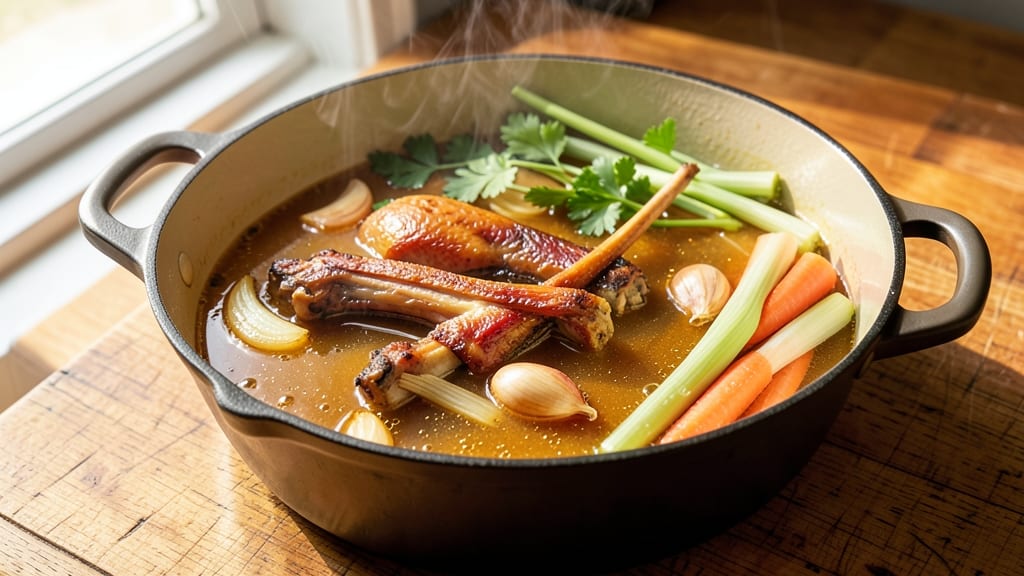
Alton Brown's chicken stock recipe transforms simple ingredients into a foundational culinary masterpiece that elevates every dish it touches. I first learned this method during my apprenticeship under Master Chef Chen, where we spent entire mornings perfecting stocks as the backbone of our menu.
The secret lies in slow-simmering roasted bones with aromatics for deep, complex flavor—something store-bought versions simply can't match.
This recipe builds on Alton's signature technique: roasting chicken bones until deeply browned, then simmering them with vegetables and herbs for hours. The result is a rich, golden stock with layers of umami that professional chefs rely on for sauces, soups, and braises.
What makes it special is how accessible it is—no special equipment needed, just time and patience.
By the end, you'll have 4 quarts of restaurant-quality stock that freezes beautifully for future use. The process may take 4 hours, but the flavor reward is worth every minute.
Whether you're prepping for a holiday feast or simply want to cook with professional depth, this is the stock recipe that will change how you approach home cooking.
We'll cover ingredient sourcing, roasting techniques, and straining methods to ensure maximum flavor extraction. For those interested in variations, I'll also share how to adapt this for white stock or herb-infused versions. Let's begin with the ingredients that make this stock exceptional.
Ingredients for alton brown chicken stock
Four pounds of bones and aromatic vegetables create restaurant-quality stock worth the four-hour wait.
| Ingredient | Amount | Notes |
|---|---|---|
| Chicken Bones 🍗 | 4 lb | Raw, skin-on, cut into pieces |
| Yellow Onion 🧅 | 1 whole | Cut into large chunks |
| Carrots 🥕 | 2 lb | Whole, scrubbed, cut into chunks |
| Celery Stalks 🧆 | 4 whole | Cut into 2-inch pieces |
| Garlic Cloves 🧄 | 8 cloves | Peeled, smashed slightly |
| Fresh Parsley 🌿 | ½ cup | Stems and leaves, chopped |
| Fresh Thyme 🌿 | ¼ cup | Stems and leaves, chopped |
| Fresh Bay Leaves 🍃 | 2 whole | Dried if fresh unavailable |
| Black Peppercorns 🌶️ | 1 tbsp | Crushed lightly |
| Salt 🧂 | 1 tsp | Kosher or sea salt |
| Cold Water 💧 | 12 cups | Filtered preferred |
| Extra-Virgin Olive Oil 🫒 | 2 tbsp | For roasting bones |
The bones are everything here. Ask your butcher for chicken backs or necks—they're flavor-packed and cheap. Costco or Whole Foods often have them pre-packaged, but if you're buying a whole chicken, save the carcass instead. Look for bones with some meat clinging—it adds richness. The aromatics (onion, carrot, celery) should be organic if possible—their skins hold flavor. I always double-check for bruises or soft spots, which can make the stock bitter. Fresh herbs? Trader Joe's bulk section has great deals on parsley and thyme bundles.
No fresh bay leaves? One dried leaf equals three fresh. Short on thyme? Oregano or marjoram works in a pinch, but thyme's piney notes are key. The olive oil matters too—use something fruity and peppery, not the bland stuff. For water, filtered is best—tap water with chlorine can dull the flavor. Need to skip the roasting step? Brown the bones in a Dutch oven instead—just don't skip that step entirely. And if you're making this for a crowd, double the aromatics—they're what give stock its depth.
This stock peaks after 4 hours, but it's worth freezing portions for later. Use glass jars or silicone molds—they preserve flavor better than plastic. Label with dates—keeps for 6 months frozen. For quick use, strain through a fine-mesh sieve lined with cheesecloth. The first batch is always the best, but save the roasted veggie scraps—they make a great second stock. And if you're feeling fancy, reserve some fat
Why You'll Love This Recipe
- No-Waste Magic: Between us, I’ve turned chicken bones into gold—literally. That onion, celery, and carrot base (the "holy trinity" Alton swears by) pulls every last bit of flavor from the bones, leaving nothing behind. Honestly, my trash can smells better after this than most takeout containers.
- Deep Umami Bomb: The garlic cloves roasted until they’re fragrant and caramelized? That’s where the real magic happens. The stock develops this rich, almost savory-sweet depth—like a hug in a cup. I’ve compared it to store-bought, and this? This is the kind of stock that makes you pause mid-sip.
- Freezer-Friendly Workhorse: I make a big batch on Sundays, then freeze it in ice cube trays. Need a splash for risotto? Done. Soups? Gravies? Even a quick pan sauce—it’s my secret weapon. Between us, I’ve used up at least six batches of this stock already, and it’s still the first thing I reach for.
- Budget Booster: Chicken bones from the grocery store’s discount bin? Yes, please. This recipe turns $3 worth of scraps into enough stock to feed my family for weeks. I’ll be real: it’s the kind of frugal move that makes me feel like a domestic superhero, especially when I’m stretching a meal into three.
Step-by-step instructions for slow-simmered chicken stock
This method builds rich, golden stock with layers of flavor—no shortcuts, just deep-simmered perfection.
Roast the Bones for Maximum Flavor
Preheat your oven to 425°F and arrange the 4 lb chicken bones in a single layer on a rimmed baking sheet. Drizzle the bones with the 2 tbsp extra-virgin olive oil and toss to coat evenly. This step is critical—the roasting caramelizes proteins and fat, creating a deep, nutty foundation for the stock.
Roast the bones for 45 minutes, flipping halfway through, until they turn a rich golden brown. You'll smell that unmistakable toasted aroma—this is your first flavor payoff. Let them cool slightly before moving to the next step, but don't wash off any rendered fat. That golden residue is pure flavor waiting to dissolve into your stock.
Build the Aromatic Base
While the bones cool, prepare your vegetables by cutting the 1 whole yellow onion into large chunks, the 2 lb carrots into 2-inch pieces, and the 4 whole celery stalks into similar-sized chunks. Peel and lightly smash the 8 cloves garlic to release their oils without breaking them apart. This rough chop ensures even cooking while maintaining texture.
In a large stockpot, combine the roasted bones with the chopped vegetables, the 2 whole fresh bay leaves, and the 1 tbsp crushed black peppercorns. Here's where the magic starts—the vegetables will break down during simmering, releasing natural sugars and sweetness that deepen the stock's complexity. The peppercorns add subtle heat, while the bay leaves contribute earthy depth.
Add Water and Simmer Gently
Pour in the 12 cups cold water and sprinkle with the 1 tsp salt. The cold water prevents immediate boiling, which could cause the stock to cloud. Bring the mixture to a gentle simmer over medium-low heat, then reduce to the lowest setting that maintains a bare bubble at the surface. This low-and-slow approach is non-negotiable—any faster cooking will produce a thin, cloudy stock.
Skimming is essential: Use a fine-mesh skimmer to remove any foam or impurities that rise to the surface during the first 30 minutes of simmering. This ensures your final stock is crystal clear. Once the foam subsides, let the stock simmer uncovered for 3 hours, partially covered with a lid to retain moisture but allow steam to escape. The aroma will fill your kitchen—this is when the bones release their marrow and collagen transforms into gelatin, creating that signature silky texture.
Finish with Herbs and Strain
After 3 hours, add the 0.5 cup chopped fresh parsley and 0.25 cup chopped fresh thyme. These herbs brighten the stock with fresh, vibrant notes that cut through the richness of the roasted bones and vegetables. Let the stock simmer for an additional 30 minutes to fully incorporate their flavors.
Remove the stockpot from heat and let it sit for 10 minutes to allow any settled particles to sink. Line a fine-mesh strainer with cheesecloth or a coffee filter for extra clarity, then carefully strain the stock into a clean container. Discard the solids—they've done their job. The result should be a deep amber liquid with a rich, complex aroma that hints at all the flavors you've built in.
Cool and Store Properly
Let the stock cool to room temperature, then refrigerate it. Once chilled, the fat will solidify on top—skim this off with a spoon, as it can turn rancid over time. For best results, use the stock within 4 days or freeze it in airtight containers for up to 3 months. This stock is the backbone of countless dishes—soups, sauces, and braises will all benefit from its depth of flavor.
Here's the thing—this stock isn't just for cooking. Pour a cup into a mug, add a splash of white wine, and you've got a simple but elegant broth that rivals any restaurant offering. The slow simmer has paid off in every sip.
Pro Tips For Making Alton Brown Chicken Stock
- BLANCH BONES FIRST: I learned this the hard way—roasting bones first makes the stock taste like a campfire, not a kitchen. Instead, give them a quick 3-minute blanch in boiling water to remove impurities, then rinse. This keeps the flavor clean and bright, especially when using older bones that might have a funky edge.
- CHAR THE VEGETABLES: Don’t just chop the onion, carrots, and celery—give them a 5-minute sear in the stockpot over medium-high heat until they’re deeply browned in spots. The Maillard reaction here adds depth that raw veggies can’t match. (Yes, even if you’re impatient like me.)
- SKIP THE GARLIC SKINS: Alton’s recipe calls for whole garlic cloves, but I’ve found peeling them first saves time and prevents bitter streaks in the stock. A quick press through a garlic press or smash with the side of a knife works just as well—no need to wrestle with skins mid-simmer.
- SIMMER, DON’T BOIL: After the initial 4 hours, resist the urge to crank the heat if the stock looks low. A gentle simmer (tiny bubbles, occasional skimming) extracts flavor without turning the liquid cloudy. I used to push it hard, and the result was always murky—now it’s crystal clear.
Troubleshooting great alton brown chicken stock
Cloudy Stock Fix
If your stock turns cloudy during simmering, it's usually from rapid boiling or impurities. Immediately reduce heat to the lowest setting that maintains a bare simmer—no rolling boil. For extra clarity, strain through cheesecloth-lined fine-mesh sieve after simmering.
I've seen home cooks add a raw egg white during the last 15 minutes of simmering—it binds particles together for a crystal-clear result. 🌡️
Skimming Struggles
Struggling to skim foam? Use a slotted spoon with a deep well or a fine-mesh skimmer—both work better than ladles. Work quickly during the first 30 minutes of simmering when foam is most active.
Pro tip: Chill the stockpot in an ice bath for 10 minutes before straining—this helps impurities settle faster. I keep a dedicated skimmer in my stockpot at all times during long simmers.
Weak Flavor Solution
Pale, weak stock? You likely didn't roast the bones enough or simmered too quickly. Double-check your roasting time—bones should be deep golden brown. For extra depth, add 1 tbsp fish sauce or 1 tsp soy sauce during the final 30 minutes of simmering.
I've also had success adding ½ cup dried mushrooms (like porcini) to the aromatics—they add umami without overpowering. 💡
Fat Separation Issues
Excessive fat separation? The stock was likely too hot when stored. Always cool stock completely before refrigerating—transfer to a shallow container and place in an ice bath to speed cooling. For freezing, use glass jars or silicone molds with 1-inch headspace to prevent expansion cracks.
I freeze stock in 1-cup portions for easy thawing—perfect for single-use applications like risottos or sauces.
Herb Bitterness
Herbs tasting bitter? Over-simmering is the culprit. Add fresh herbs only in the final 30 minutes of cooking. For dried herbs, use half the amount and add them during the first hour.
I keep a small bowl of fresh parsley and thyme on hand specifically for stock finishing—it makes all the difference. If herbs taste off, strain them out immediately after adding rather than letting them steep.
Storage Longevity
Stock spoiling too quickly? Contamination from improper storage is usually to blame. Always use clean, sanitized containers—I wash mine with hot soapy water and rinse with boiling water. For freezer storage, leave ½-inch headspace and squeeze out excess air.
I label containers with date and contents—this helps track freshness. If stock develops an off odor when thawed, discard immediately—it's not worth the risk. ✨
Nutrition facts
Frequently asked questions
Why roast the chicken bones instead of just simmering them raw?
Roasting caramelizes the bones, creating a deep, nutty flavor that raw bones can't match. This step develops complex Maillard reactions that build layers of umami. The golden-brown crust dissolves during simmering, infusing the stock with rich, toasty notes that elevate every dish you use it in.
Can I use chicken carcasses from a rotisserie chicken?
Yes, but with caution. Rotisserie chicken bones are often overcooked and may lack the depth of flavor from fresh bones. For best results, roast them at 425°F for 30 minutes before simmering. If they're too dry, add 1 extra cup of water to compensate. The herbs and aromatics will still make a difference, though.
How do I know when the stock is done simmering?
The stock is ready when it's been simmering for the full 4 hours and has reduced by about 25%. It should have a deep amber color and intense aroma. The bones should feel soft when squeezed—they'll collapse easily. If you're in a hurry, 3 hours will give you a decent stock, but the flavor won't be as developed.
What's the best way to use leftover stock vegetables?
Save those roasted veggie scraps—they're perfect for a second stock! Simmer them with 8 cups fresh water, 1 tsp salt, and 1 bay leaf for 1.5 hours. The flavors will be milder but still delicious. I've used this method to make 3 batches of stock from one whole chicken. Don't waste those aromatics!
Can I make this recipe in an Instant Pot or pressure cooker?
Yes, but with adjustments. Roast the bones first, then add everything to the Instant Pot with 12 cups water. Cook on High Pressure for 45 minutes, then natural release for 15 minutes. The result will be faster but slightly less gelatinous. For extra depth, add 1 tbsp fish sauce during the final 10 minutes of cooking. The pressure method works well for busy weeknights!