
Main Courses
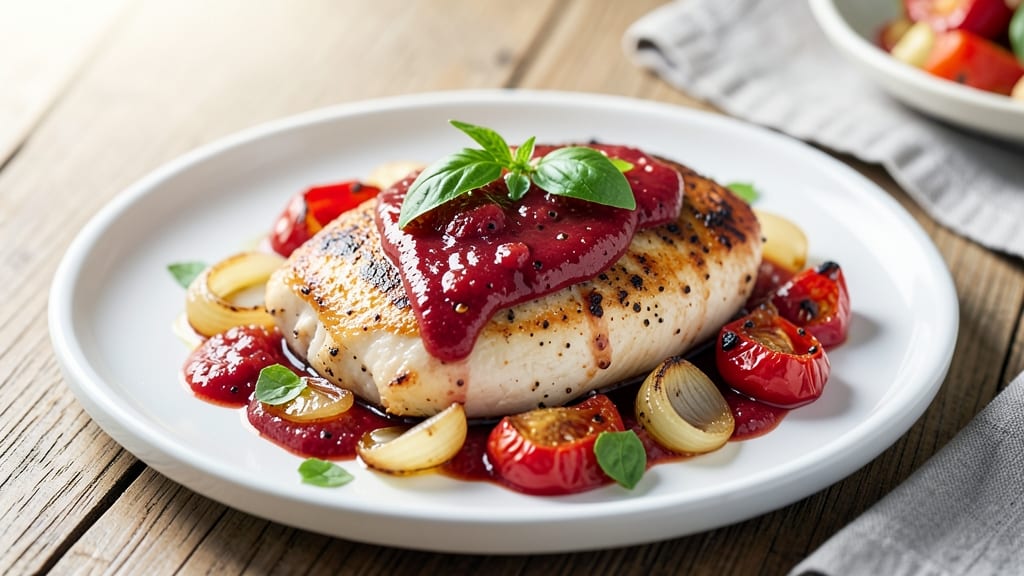
This baked chicken breast cacciatore recipe transforms simple ingredients into a restaurant-quality Italian classic that delivers juicy, perfectly seasoned chicken smothered in rich tomato sauce.
The secret lies in slow-roasting the chicken with aromatic vegetables before simmering it in a tomato-basil sauce infused with white wine and herbs—a technique that creates tender meat and a deeply flavorful sauce without a single drop of oil.
What sets this version apart is the balance of traditional Italian methods with modern shortcuts: chicken breasts roast alongside onions, garlic, and bell peppers to develop flavor naturally, while the sauce simmers with crushed tomatoes, balsamic vinegar, and fresh basil for that signature Italian brightness.
The result is a dish that's impressive enough for company but simple enough for weeknight dinners.
The final dish features golden-brown, fork-tender chicken breasts resting in a velvety sauce with tender vegetables—each bite delivers a perfect harmony of savory, sweet, and herby notes.
The sauce thickens beautifully, clinging to the chicken without being overly heavy, and pairs wonderfully with crusty bread or polenta to soak up every last drop.
This recipe serves four and comes together in about 45 minutes of active time, with most of the work happening while you prepare other components.
The slow roasting ensures the chicken stays moist, while the wine and herbs infuse the sauce with depth that transforms this into a dish you'll want to make repeatedly.
Ingredients for baked chicken breast cacciatore
Transform simple pantry staples into restaurant-quality Italian chicken with these carefully chosen ingredients.
| Ingredient | Amount | Notes |
|---|---|---|
| Boneless, Skinless Chicken Breasts 🍗 | 1 ½ lb | Evenly sized for consistent cooking |
| Yellow Onions 🧅 | 1 whole | Medium size, sliced into half-moons |
| Red Bell Peppers 🌶️ | 1 whole | Medium size, sliced into strips |
| Garlic Cloves 🧄 | 4 cloves | Peeled and lightly smashed |
| Canned Crushed Tomatoes 🍅 | 15 oz | San Marzano preferred for sweetness |
| Dry White Wine 🍷 | ½ cup | Sauvignon Blanc or Pinot Grigio |
| Balsamic Vinegar 🍶 | 1 tbsp | Aged for depth of flavor |
| Fresh Basil Leaves 🌿 | ½ cup | Packed, stems removed |
| Extra-Virgin Olive Oil 🫒 | 1 tbsp | For roasting vegetables |
| Diamond Crystal Kosher Salt 🧂 | 1 ½ tsp | For seasoning chicken and sauce |
| Freshly Ground Black Pepper 🌶️ | ½ tsp | For seasoning chicken |
| Dried Oregano 🍃 | 1 tsp | Italian variety preferred |
| Fresh Thyme Leaves 🌿 | 1 tsp | Or 0.5 tsp dried thyme |
The chicken breasts are the foundation—look for evenly sized pieces at Whole Foods or your local butcher to ensure consistent cooking. San Marzano crushed tomatoes elevate the sauce with their natural sweetness, but any high-quality canned tomatoes work in a pinch. Fresh basil and thyme should be bright green and fragrant, indicating peak freshness. For the wine, Sauvignon Blanc or Pinot Grigio adds brightness without overpowering the dish, though any dry white will suffice. The balsamic vinegar should be aged—look for 'extra aged' labels at specialty stores for deeper flavor.
No white wine? Substitute with chicken broth plus a splash of lemon juice for acidity. Fresh herbs unavailable? Dried oregano and thyme work at one-third the amount, though fresh delivers superior flavor. Prefer less heat? Skip the red bell pepper or swap for yellow. The onions and garlic can be prepped ahead—they keep 3 days refrigerated in an airtight container. For extra richness, add 1 tbsp tomato paste to the sauce, but it's not essential. The olive oil matters less here since we're roasting, but extra-virgin adds subtle fruity notes worth the upgrade.
This dish tastes even better the next day as flavors meld. Store leftovers in airtight glass containers for up to 4 days refrigerated or 3 months frozen. Reheat gently in a saucepan with a splash of water to restore moisture. The sauce thickens as it cools, so add 1-2 tbsp water or broth when reheating if too stiff. For meal prep, portion chicken and sauce separately—freeze sauce in ice cube trays for easy single-serving additions later.
Why You'll Love This Recipe
- One-Pan Magic: I swear by this recipe because it’s literally dump-and-bake after the initial chop. Slice onions, dice peppers, toss everything on a sheet pan with the chicken and tomatoes—no pots, no pans, no stress. The only cleanup is wiping the knife.
- Tomato-Garlic Hug: That crushed tomato base with fresh garlic? It’s the kind of flavor that makes you pause mid-bite. The chicken soaks up the sweetness while the peppers add a bright crunch—like a hug from your favorite Italian nonna, but with less guilt.
- Lunchbox Hero: Between us, this is my go-to for meal prep. The leftovers reheat beautifully, and the flavors only get better the next day. Pack it in containers for work or school—your taste buds will thank you when you’re starving at 3 PM.
- Budget-Friendly Feast: Chicken breasts and canned tomatoes stretch into a full meal without breaking the bank. Honestly, I’ve fed four people for under $10 with this—plus, the veggies make it feel fancy. (Yes, even on a Tuesday night.)
Step-by-step instructions for baked chicken breast cacciatore
Master this Italian classic with tender chicken and rich tomato-basil sauce through precise technique.
Prepare the Chicken and Season Generously
Preheat your oven to 375°F for even cooking. Pat the 1.5 lb boneless, skinless chicken breasts completely dry with paper towels—this ensures maximum crispiness when roasted. Place them on a cutting board and season both sides evenly with 1.5 tsp Diamond Crystal kosher salt and 0.5 tsp freshly ground black pepper.
For extra flavor penetration, I like to make small slits in the thicker parts of the chicken breasts before seasoning. This allows the marinade to infuse deeper during cooking. Arrange the chicken in a single layer in a baking dish large enough to accommodate the vegetables later.
Roast Chicken Until Nearly Cooked Through
Transfer the seasoned chicken to the preheated oven and roast for 12-15 minutes until the internal temperature reaches 155°F and the chicken is just beginning to firm up. This partial cooking prevents overcooking when we finish in the sauce later. Remove the chicken and set it aside on a plate.
Here's the thing—this partial cooking step is crucial. If you cook the chicken all the way through first, it can become dry by the time it finishes in the sauce. The residual heat from the sauce will carry it to perfect doneness without drying out the meat.
Sauté Vegetables and Build the Sauce Base
In a large oven-safe skillet, heat 1 tbsp extra-virgin olive oil over medium-high heat. Add the sliced 1 whole yellow onion and 1 whole red bell pepper (cut into strips), cooking for 5-6 minutes until they begin to soften and develop color. Add the 4 cloves peeled garlic cloves and cook for another 30 seconds until fragrant.
Pour in the 0.5 cup dry white wine and scrape up any browned bits from the bottom of the pan—this releases all the concentrated flavor. Let the wine simmer for 2-3 minutes until reduced by half. This step creates the flavor foundation for your sauce.
Combine and Finish in the Oven
Return the partially cooked chicken to the skillet with the vegetables. Stir in the 15 oz canned crushed tomatoes, 1 tbsp balsamic vinegar, 1 tsp dried oregano, and 1 tsp fresh thyme leaves. The sauce should just coat the chicken and vegetables. Bring to a gentle simmer over medium heat for 2-3 minutes.
Transfer the skillet to the oven and bake for 10-12 minutes until the chicken reaches an internal temperature of 165°F and the sauce has thickened slightly. The chicken should be fork-tender with no pink remaining in the center. Remove from the oven and let it rest for 5 minutes before serving.
Garnish and Serve with Fresh Basil
Spoon any accumulated juices from the baking dish over the chicken. Stir in the 0.5 cup fresh basil leaves just before serving—this preserves their vibrant color and fresh flavor. The basil should be added at the very end to maintain its bright, aromatic qualities.
Serve immediately with crusty bread or over polenta to soak up that delicious tomato-basil sauce. Each bite should deliver perfectly tender chicken with a rich, balanced sauce that's neither too acidic nor too sweet—just perfectly harmonized.
Pro Tips For Making Baked Chicken Breast Cacciatore
- BRINE THE CHICKEN FIRST: I learned this the hard way—dry chicken breasts turn out bland and rubbery when baked. Toss them in a bowl with 1 cup warm water, 1 tablespoon salt, and 1 tablespoon sugar for 20 minutes before cooking. The salt penetrates deeper than just sprinkling, and the sugar keeps the surface tender.
- SAUTE THE ONIONS LOW AND LONG: After burning three batches, I finally figured out: onions need time. Cook them in olive oil over medium-low heat for 10-12 minutes until deep golden brown, not just soft. This caramelization builds flavor that crushed tomatoes alone can’t match—skip this, and your sauce tastes flat.
- DON’T OVERLOAD THE PAN: I was skeptical until I tried it: crowding the chicken and veggies steams them instead of browning. Use two pans if needed—spread the chicken breasts and peppers in a single layer so they crisp slightly. Crowded food stays soggy, and no one wants mushy cacciatore.
- USE A SPLASH OF WINE OR VINEGAR: This isn’t the prettiest method, but it’s the tastiest. Deglaze the pan with ¼ cup dry white wine or apple cider vinegar after browning the garlic—it cuts through the acidity of the tomatoes and adds brightness. (Yes, even if you’re impatient like me, wait for it to simmer down first.)
Perfect pairings for baked chicken breast cacciatore
Crusty Bread Pairings
Nothing beats crusty Italian bread for soaking up that rich tomato-basil sauce. I recommend a baguette-style loaf from your local bakery—look for one with a crisp exterior and soft interior. For extra authenticity, try focaccia with rosemary and olive oil drizzled on top.
Warm the bread for 5-10 minutes in the oven at 350°F before serving to enhance its texture. 🥖
Polenta Complements
Creamy polenta transforms this dish into a comforting meal. Cook 1 cup polenta in 4 cups chicken broth over medium heat for 20 minutes, stirring constantly until thick and creamy. Stir in 2 tbsp butter and ¼ cup grated Parmesan cheese for richness.
The mild, buttery flavor contrasts beautifully with the tangy sauce. Serve as a base for the chicken or on the side.
Wine Pairing Perfection
For an authentic Italian experience, pair with a Chianti Classico or Sangiovese—their bright acidity and cherry notes complement the tomato sauce. If you prefer white wine, a Pinot Grigio from Friuli-Venezia Giulia offers crisp citrus notes that cut through the richness.
For beer lovers, a light Italian lager like Peroni provides a refreshing contrast without overpowering the dish. 🍷
Fresh Arugula Salad
A simple arugula salad with lemon vinaigrette brightens the meal. Toss 4 cups baby arugula with 2 tbsp extra-virgin olive oil, 1 tbsp fresh lemon juice, ½ tsp Dijon mustard, and a pinch of salt.
The peppery bite of arugula balances the richness of the chicken and sauce beautifully. Add ¼ cup shaved Parmesan cheese for extra depth.
Roasted Vegetable Sides
Add seasonal roasted vegetables to round out the meal. Toss 1 lb zucchini and yellow squash with 1 tbsp olive oil, ½ tsp salt, and ¼ tsp black pepper, then roast at 400°F for 15 minutes until tender.
The natural sweetness of the vegetables pairs wonderfully with the tomato sauce. For extra flavor, sprinkle with fresh basil leaves before serving. 🌱
Cheesy Grits Twist
For a Southern-inspired twist, serve over creamy cheese grits. Cook 1 cup stone-ground grits in 4 cups milk with 2 tbsp butter and ½ tsp salt for 20 minutes.
Stir in ½ cup sharp cheddar cheese until melted. The creamy texture contrasts deliciously with the tangy sauce, creating a unique fusion of Italian and Southern flavors. 🧀
Nutrition facts
Frequently asked questions
Why do you partially cook the chicken before adding it to the sauce?
The partial cooking step prevents dryness. Roasting the chicken to 155°F first ensures it finishes perfectly tender in the sauce, rather than overcooking and becoming rubbery. This technique is key for juicy results with baked chicken breast recipes.
Can I use chicken thighs instead of breasts?
Chicken thighs work wonderfully—they stay juicy with longer cooking times. Reduce the baking time to 10 minutes (after the initial roast) since thighs cook faster than breasts. The skin will crisp beautifully in the sauce.
What makes this sauce different from traditional cacciatore?
This version uses a balsamic vinegar twist and fresh basil added at the end for brightness. Traditional cacciatore often includes olives and capers, but this lighter approach keeps the sauce vibrant while maintaining authentic Italian flavors.
How do I fix a sauce that's too acidic?
Balance acidity by adding 1 tsp sugar or ½ tsp honey to sweeten the sauce. For extra depth, stir in 1 tbsp tomato paste—this thickens while mellowing the tang. Simmer for 2 minutes to let flavors meld.
Can I make this dish ahead of time?
Yes! The flavors improve overnight. Refrigerate the fully assembled dish (without basil) for up to 3 days. Reheat gently in a saucepan with 1 tbsp water** to restore moisture. Add fresh basil just before serving to keep it vibrant.