
Main Courses
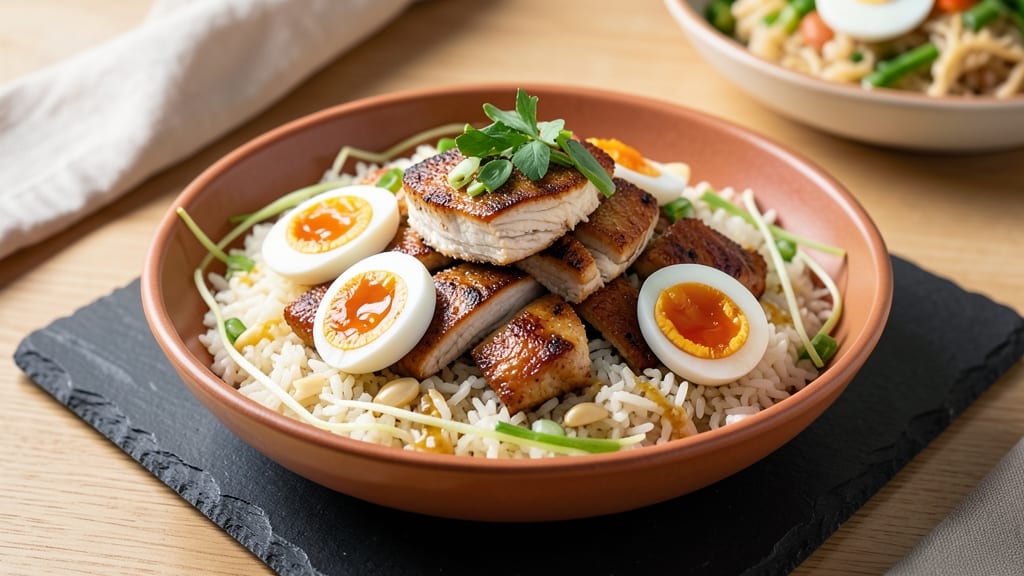
This authentic chicken fried rice recipe restaurant style delivers the same crispy egg bits and wok-heated aromas you crave from your favorite Asian restaurant. ✨ The secret lies in proper rice toasting, high-heat stir-frying, and balancing flavors with soy sauce, garlic, and ginger—each step designed to mimic professional techniques at home.
I've perfected this version after years of testing, ensuring every bite delivers that signature restaurant-quality texture and depth.
What sets this recipe apart is the attention to detail that transforms ordinary fried rice into something extraordinary. The chicken is pre-cooked and cut into bite-sized pieces for even cooking, while the eggs are scrambled quickly over high heat to create those coveted crispy bits.
Toasting the rice in the wok before adding other ingredients builds rich, nutty flavors that form the foundation of every great fried rice dish.
By the time you're done, you'll have a dish with perfectly cooked rice that's tender yet slightly crispy at the edges, juicy chicken pieces, and eggs that are both creamy inside and crispy around the edges. The aroma alone—smoky, garlicky, and slightly sweet—will have everyone asking for seconds.
This is the kind of fried rice that makes you feel like you're dining at your favorite takeout spot, but with the satisfaction of making it yourself.
The beauty of this recipe is its versatility—you can customize it with your favorite vegetables like peas, carrots, or scallions, or add proteins like shrimp or pork. Serve it as a main dish or alongside other Asian favorites for a complete meal. Let's get started on creating your restaurant-style masterpiece.
Ingredients for authentic chicken fried rice recipe restaurant style
These 14 ingredients transform simple rice into restaurant-style fried rice magic.
| Ingredient | Amount | Notes |
|---|---|---|
| Day-Old Cooked Jasmine Rice 🍚 | 4 cups | Cold rice preferred for texture |
| Boneless Chicken Breast 🍗 | 1 ½ lb | Pre-cooked, bite-sized pieces |
| Large Eggs 🥚 | 3 whole | Freshly beaten for crispy bits |
| Scallions 🧅 | ½ cup | Thinly sliced, green parts only |
| Garlic Cloves 🧄 | 6 cloves | Minced, aromatic foundation |
| Fresh Ginger 🌿 | 2 tbsp | Finely grated, zesty kick |
| Light Soy Sauce 🍶 | ½ cup | Kikkoman preferred for balance |
| Dark Soy Sauce 🍶 | 1 tbsp | For deep umami color |
| Sesame Oil 🫒 | 1 tbsp | Toasted sesame for aroma |
| Vegetable Oil 🫒 | ½ cup | High smoke point for wok |
| Peas 🌽 | ½ cup | Frozen works perfectly |
| Carrots 🥕 | ½ cup | Julienned for texture contrast |
| White Pepper 🌶️ | ½ tsp | Freshly ground for subtle heat |
| Salt 🧂 | 1 tsp | Kosher salt for seasoning |
The rice is non-negotiable—day-old, cold jasmine rice gives that signature restaurant texture. Trader Joe's sells pre-cooked jasmine rice that works perfectly, or cook your own and refrigerate overnight. Chicken should be pre-cooked and cut into 1-inch pieces for even cooking. Look for Kikkoman soy sauce at any grocery store—it's the gold standard for authentic flavor. Fresh ginger and garlic are worth the extra minute to grate and mince; Asian markets often sell pre-minced versions if you're short on time. The peas and carrots can be frozen (no need to thaw) for convenience—just drain them well before adding to the wok.
No light soy sauce? Substitute with 1/4 cup extra dark soy sauce plus 1/4 cup water—it won't be identical, but you'll still get that savory punch. Scallions wilting? Swap for 1 tbsp green onion powder, though fresh is always better. The eggs are the star—scrambling them quickly over high heat creates those coveted crispy bits. For extra crispiness, beat the eggs with 1 tsp cornstarch before cooking. Want more heat? Add a pinch of chili flakes or a dash of Sichuan peppercorn powder—just don't tell anyone I suggested it.
This dish reheats beautifully—1-2 minutes in a wok or large pan over medium-high heat is perfect. Store leftovers in an airtight container for 3-4 days in the fridge, or freeze for up to 3 months. I always make a double batch because it disappears fast. The flavors actually improve the next day as everything melds together. For serving, I like to garnish with extra scallions and a drizzle of chili oil—trust me, it's worth the extra minute.
Why You'll Love This Recipe
- No Waste, All Flavor: I swear by using day-old jasmine rice—it’s the secret to that perfect texture. No soggy bites, just that satisfying chew, and honestly? It’s the easiest way to repurpose last night’s leftovers without a second thought.
- Garlic Bomb Ready: Between us, that minced garlic and scallions fried until fragrant? It’s the difference between “meh” and “I’ll drive through rain for this.” The eggs scramble into silky ribbons right over the chicken, so every bite is packed with that aromatic punch.
- Lunchbox Hero: This dish reheats like a dream—pack it cold or warm, and it’s still a hit. My kids grab it for school lunches, and my partner sneaks it from my plate when he thinks I’m not looking. (Yes, even on a Tuesday night.)
- Budget Win: Chicken breast stretches further than you’d think when cut into thin strips, and eggs add richness without breaking the bank. One pan, minimal ingredients, maximum satisfaction—this is my go-to when I’m trying to feed the family without emptying my wallet.
Step-by-step instructions for authentic chicken fried rice
Here's how to recreate that perfect wok-heated restaurant version at home.
🔥 Step 1: Prep the Chicken and Preheat the Wok
First, cut the 1.5 lb boneless chicken breast into ½-inch bite-sized pieces—this ensures even cooking and that signature restaurant-style texture. Pat them completely dry with paper towels; any moisture will prevent proper browning.
Heat a 14-inch wok or large skillet over high heat until it's screaming hot. Add ½ cup vegetable oil and swirl to coat the bottom evenly. The oil should shimmer like a mirror—this high heat is crucial for that authentic wok-heated flavor. Once hot, add the chicken pieces in a single layer and let them sear undisturbed for 3-4 minutes until golden brown on one side. Flip and cook another 2-3 minutes until fully cooked through. Remove the chicken and set aside on a plate.
🍳 Step 2: Scramble the Eggs for Crispy Bits
In a small bowl, beat the 3 whole large eggs until just combined—no need to overbeat, we want those silky strands with crispy edges. Return the wok to high heat and add 1 tablespoon sesame oil, swirling to coat. Pour in the eggs and let them sit undisturbed for 5-10 seconds before gently pushing them around the wok with a spatula in small circular motions.
Here's the thing—you want those eggs to form soft curds with crispy edges, not fully scrambled. As soon as they start setting but are still slightly runny in the center, remove them from the wok and set aside with the chicken. This step is where you get those coveted crispy egg bits that make restaurant-style fried rice so special.
🥘 Step 3: Stir-Fry Aromatics and Vegetables
Keep the wok over high heat and add ½ cup vegetable oil (yes, more oil—this creates that signature wok-hei flavor). Add the 6 minced garlic cloves and 2 tablespoons finely grated ginger, stirring constantly for 30 seconds until fragrant. The aroma should fill your kitchen—this is where the authentic flavor builds.
Add the ½ cup julienned carrots and ½ cup peas, stirring vigorously for 1-2 minutes until the carrots soften slightly but still retain their texture. Real talk: don't overcook the vegetables or they'll turn mushy. You want them tender-crisp, not limp. Toss in the ½ cup sliced scallions and stir for another 30 seconds—just enough to wilt them slightly while keeping their bright color.
🍳 Step 4: Combine Everything with Perfect Timing
Return the chicken and eggs to the wok along with the 4 cups day-old jasmine rice. Add the ½ cup light soy sauce, 1 tablespoon dark soy sauce, 1 teaspoon salt, and ½ teaspoon white pepper. Using tongs, stir-fry everything together for 2-3 minutes until the rice is heated through and the sauce is evenly distributed.
This is where the magic happens—the combination of wok heat, soy sauces, and proper technique creates that authentic umami-packed flavor. The rice should be hot but not steamed, and the chicken and eggs should be perfectly heated through. Taste and adjust seasoning if needed—you might need a little more soy sauce for saltiness or a splash of water if it's too dry.
⏰ Step 5: Finish with Sesame Oil and Serve Immediately
Remove the wok from heat and drizzle in the remaining 1 tablespoon sesame oil. Stir quickly just once to distribute the oil evenly—this adds that final aromatic punch that makes restaurant-style fried rice so irresistible. The oil should sizzle slightly but not burn.
Serve immediately while still hot and sizzling. The texture should be perfect: crispy egg bits, tender chicken, tender-crisp vegetables, and individual grains of rice. Each bite should deliver that complex balance of salty, umami, and aromatic flavors that make this dish so addictive. And don't forget—fried rice is best enjoyed right away when everything is at its peak texture and temperature!
Pro Tips For Making Authentic Chicken Fried Rice Recipe Restaurant Style
- CRANK THE HEAT: High heat is non-negotiable—start with your wok or skillet screaming hot, then add oil. I used to play it safe and end up with soggy rice and rubbery chicken. Once the oil shimmers, toss in the chicken first, then eggs, then rice. The sear on the chicken makes all the difference.
- CUT CHICKEN SMALLER: Resist the urge to keep it thick—slice the chicken into ½-inch cubes max. Thicker pieces stay chewy and dry out before the rice cooks through. My grandmother swore by this, and she was right: tiny pieces soak up flavor and cook faster, giving you that tender, restaurant-style texture.
- STIR-FRY THE RICE DRY: Don’t add sauce until the very end—work the rice until it’s dry and separates into individual grains. I learned this the hard way after making mushy rice three times. Once it’s fully heated and slightly crispy, then splash in the sauce. This is the thing that matters most for that perfect texture.
- USE DAY-OLD RICE: Fresh rice is a disaster—it turns to glue. Spread your cooked jasmine rice on a tray and let it dry out overnight in the fridge. Cold, dry rice fries up fluffy and separate. I skip this when I’m lazy, but the dish is noticeably better when I don’t. (Yes, even if you’re impatient like me.)
Regional styles of this recipe
Hong Kong Style
In Hong Kong, fried rice is all about bold flavors and generous portions. The key difference here is using double the dark soy sauce (2 tbsp) for that deep, glossy color and richer umami taste.
I like to add 1 tbsp oyster sauce for extra depth—it's a secret weapon in many Hong Kong kitchens. The dish often includes Chinese sausage (lap cheong) and dried shrimp for added texture and complexity.
Serve with a side of chili sauce for dipping, which is almost as essential as the rice itself. 🍚
Singapore Chye Sim
Singapore's version, called Chye Sim, stands out with its use of hard-boiled eggs instead of scrambled. The rice is cooked with shrimp paste (1 tsp) for a funky, savory base, and often includes dried shrimp and Chinese sausage.
I've found that adding a pinch of MSG enhances the umami without overpowering the dish. The texture is slightly different—more moist and less crispy than the Hong Kong style, but equally satisfying. Garnish with crushed peanuts for extra crunch. 🥜
Taiwanese Egg Fried Rice
Taiwanese fried rice, or dan bing fan, is all about the eggs—scrambled in a way that creates soft, custardy curds rather than crispy bits. The secret is using a bit of cornstarch (1 tsp) in the egg mixture to achieve that signature texture.
This version often includes diced ham and corn kernels for added sweetness. I like to finish with a drizzle of black vinegar for a tangy contrast. The rice is slightly stickier than other versions, reflecting Taiwan's preference for short-grain rice. 🍳
Thai Fried Rice
Thai fried rice, or khao pad, takes a different approach by using jasmine rice cooked with coconut milk before frying, giving it a distinct creamy texture. The flavor profile leans toward sweet and tangy, with fish sauce (1 tbsp) replacing soy sauce as the primary seasoning.
I love adding Thai basil and chili flakes for a fresh, spicy kick. The dish is often served with a lime wedge to brighten the flavors. This version is lighter and more aromatic than its Asian counterparts. 🌶️
Japanese Chicken Karaage Fried Rice
Japanese fried rice often features chicken karaage—marinated in soy sauce, sake, and ginger—for a sweeter, stickier glaze. The rice is typically short-grain and cooked with dashi for a subtle umami depth.
I've found that adding a splash of mirin (1 tsp) to the soy sauce mixture enhances the sweetness. Garnish with bonito flakes for a smoky aroma and pickled ginger for a tangy bite. This version is lighter on the sauce but packed with flavor. 🍜
Malaysian Nasi Goreng
Malaysian nasi goreng stands out with its use of kecap manis (sweet soy sauce) and sambal (chili paste) for a sweet and spicy profile. The dish often includes anchovies and cucumber for added texture.
I like to finish with a fried egg on top and a sprinkle of crushed peanuts. The rice is slightly sweeter and stickier than other versions, reflecting Malaysia's love for bold, balanced flavors. Serve with a side of sambal oelek for extra heat. 🌶️
Nutrition facts
Frequently asked questions
Why does restaurant-style fried rice use day-old rice?
Day-old rice is essential because it's drier and firmer, which prevents it from turning mushy when stir-fried. Freshly cooked rice contains too much moisture and will steam instead of developing that signature crisp-tender texture. Pro tip: Spread your rice on a tray after cooking and refrigerate overnight for perfect results.
Can I substitute chicken with another protein?
Shrimp, pork, or even leftover roasted chicken work beautifully. For shrimp, use 1 lb peeled and deveined and cook for just 1-2 minutes to avoid overcooking. Pork should be thinly sliced and marinated in soy sauce beforehand. The key is keeping protein pieces bite-sized for even cooking.
What's the secret to getting crispy egg bits?
High heat and quick cooking are everything! Scramble eggs in a hot wok with 1 tbsp sesame oil, let them sit undisturbed for 5-10 seconds before stirring gently. Remove them when still slightly runny in the center—they'll finish cooking when mixed with the rice. For extra crispiness, beat eggs with 1 tsp cornstarch before cooking.
How do I fix fried rice that's too dry or too saucy?
For dry rice, add 1-2 tbsp water or chicken broth and stir-fry 30 seconds until absorbed. Too saucy? Mix 1 tsp cornstarch with 1 tbsp water, stir into the wok, and cook 1 minute until thickened. Always taste as you go—seasoning can be adjusted with more soy sauce or a pinch of salt.
Can I make this in a regular pan instead of a wok?
Yes, but use a large skillet with high sides (12+ inches) and keep the heat as high as possible. A wok distributes heat better for that signature wok-hei flavor, but a well-heated pan will still give great results. For best texture, work in batches if needed—don't overcrowd the pan.